The "Digital Concierge" System: A Conversion Sales Framework for Jewelry Designers
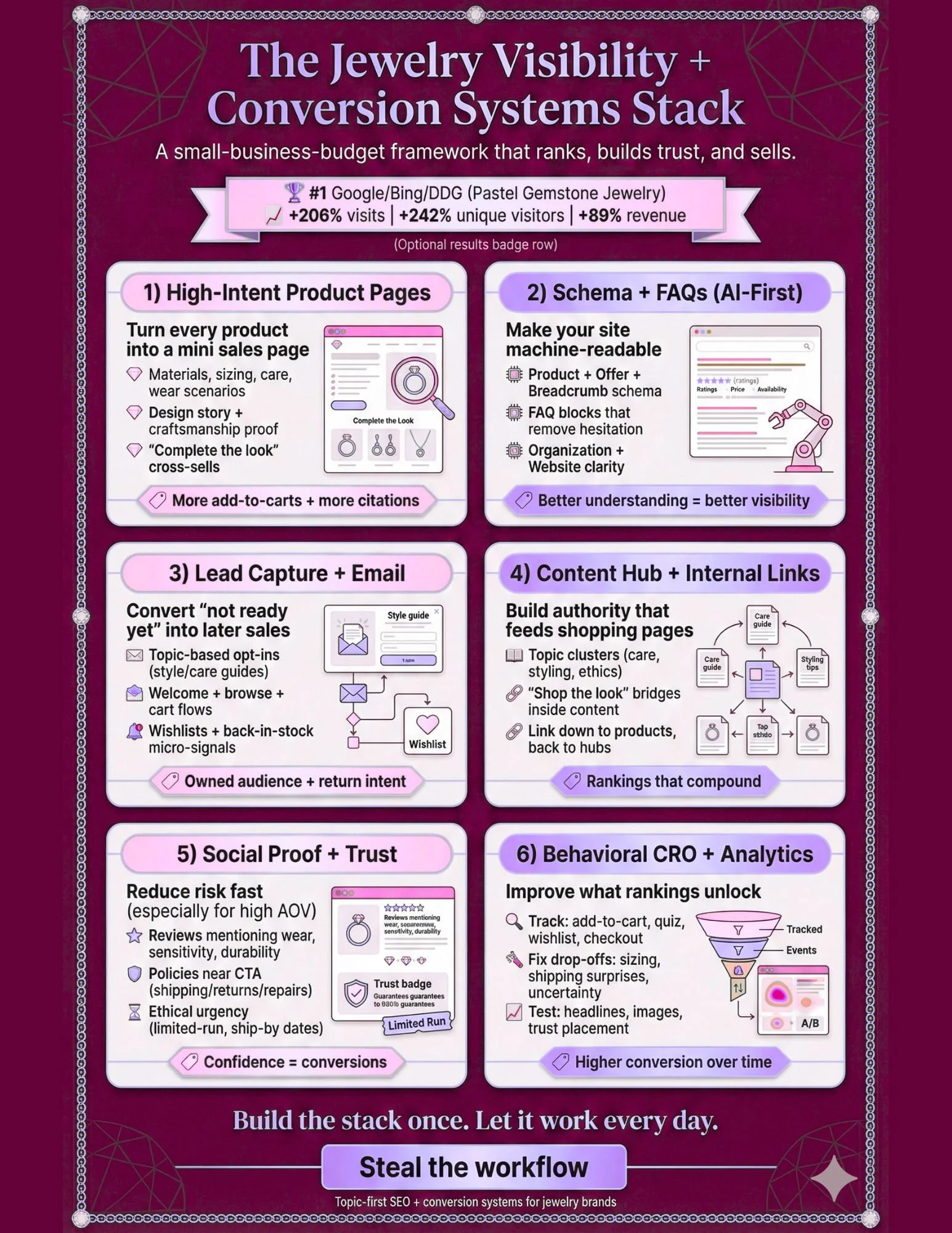
To build a conversion system that works for jewelry, start by helping visitors self-identify what they want (Vibe Check), then show curated options (Curated Reveal), answer buying questions with clear details and FAQs (Education Sequence), and offer an easy next step like shopping or a consult (Velvet Rope). This approach increases trust, improves visibility, and converts more “just looking” visitors over time.
One of the most common questions asked by either students or clients regarding their Pinterest marketing is, ‘Why don’t I have any sales from Pinterest?’ This is a fundamental breakdown in understanding what conversion in general actually looks like. Not just from Pinterest traffic, but from any source of traffic that sends you potential new leads.
Effectively marketing on any platform, including Pinterest, is a great way to drive traffic. But just because these platforms behave the way they were designed, mainly to drive clicks to your website, does not guarantee the outcome of a sale. The simplicity of a magic bullet that prints money just by receiving traffic from a social network doesn’t square with the complex psychology of the consumer mind.
Let’s fix this flawed thinking. In this post, I’ll cover the framework for building a conversion system on your website. The biggest takeaway and the common thread that supports each concept of transforming your site into a digital concierge is service. The same attitude of service is behind bringing your beautiful creations into the world, so they can make a positive impact on the people who behold them.
When you start from a place of service, you not only sell more because you earned trust in the right way, but you also earn clicks from search engines and AI bots because they view your brand as credible. Everyone goes home happy, and now you’ve built a system that reinforces outcomes at every stage of the buying process.
The most impactful conversion systems for a jewelry designer do two jobs at once:
Capture + nurture demand (so “just looking” becomes “ready to buy”)
Give search/AI systems structured proof of what you sell, who it’s for, and why you’re credible
That’s the real win: conversion systems that double as visibility systems, because the same clarity that helps a shopper decide also helps search engines understand (and reward) your pages. [1]
The framework: your website becomes a “Digital Concierge”
In The Digital Concierge framework, high-consideration buyers don’t buy off a product grid; they need to feel understood, educated, and safe before they commit.
So instead of treating every visitor the same, you build a system of concierge phases:
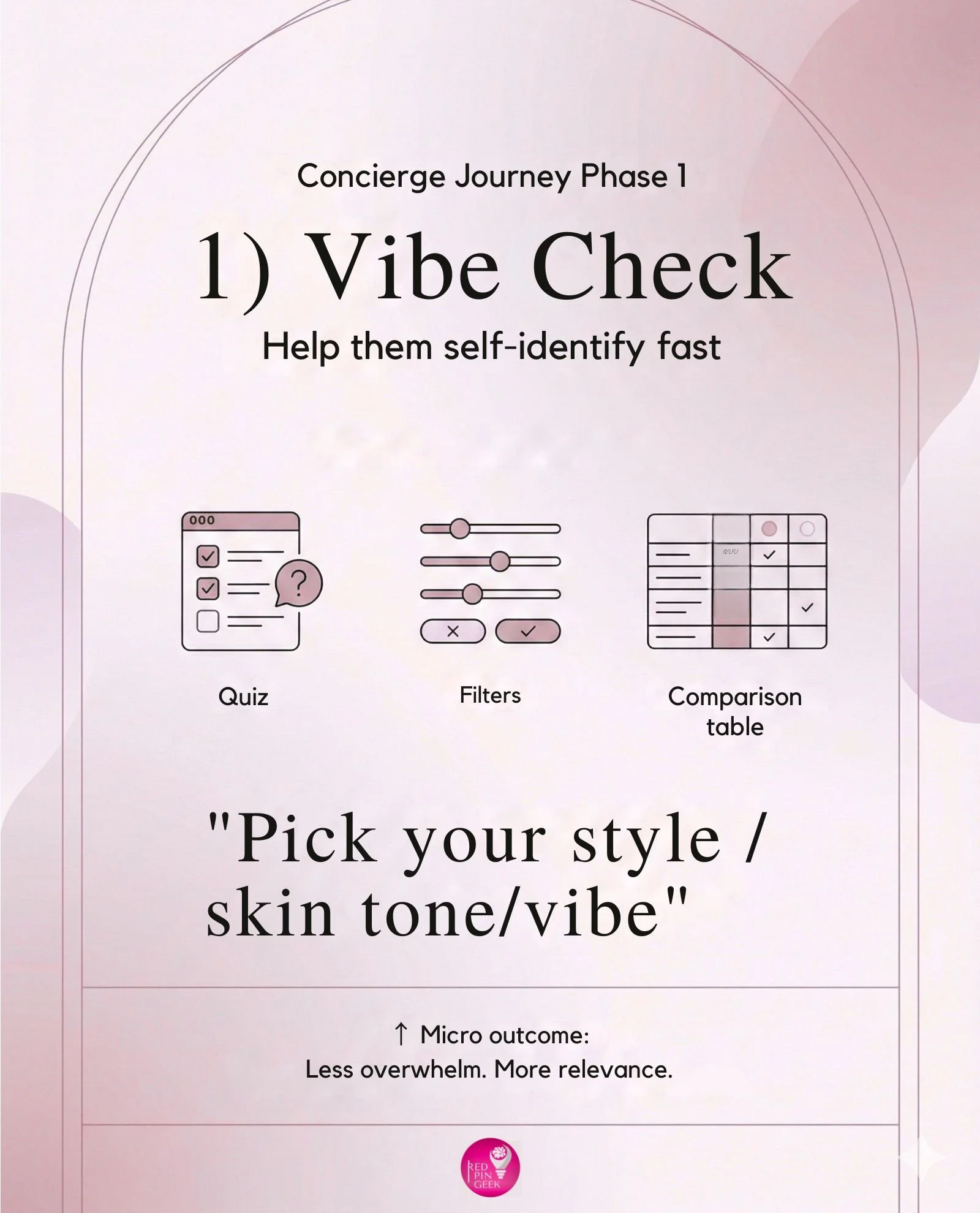
Vibe Check (help them self-identify fast)
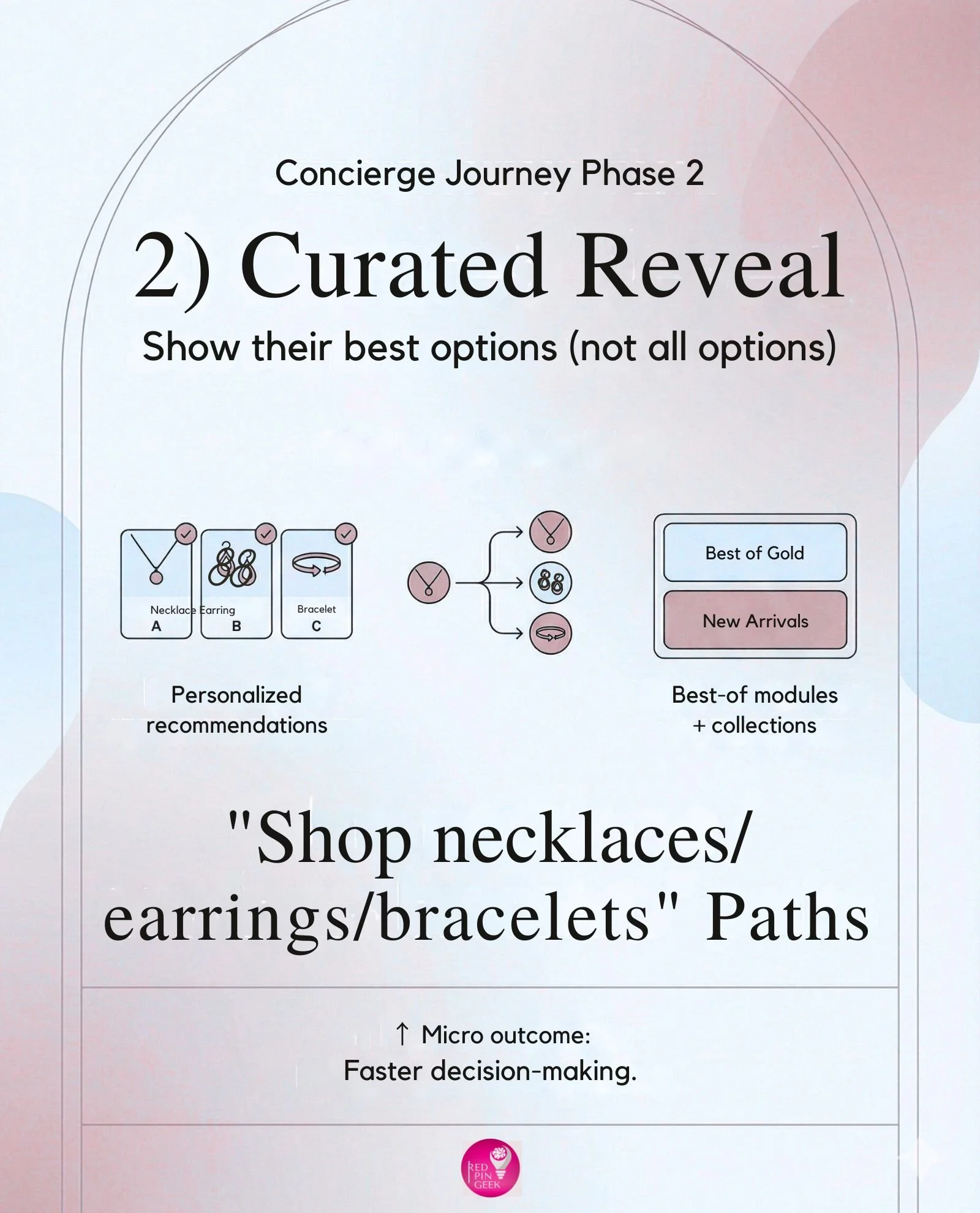
Curated Reveal (show them their options, not all options)
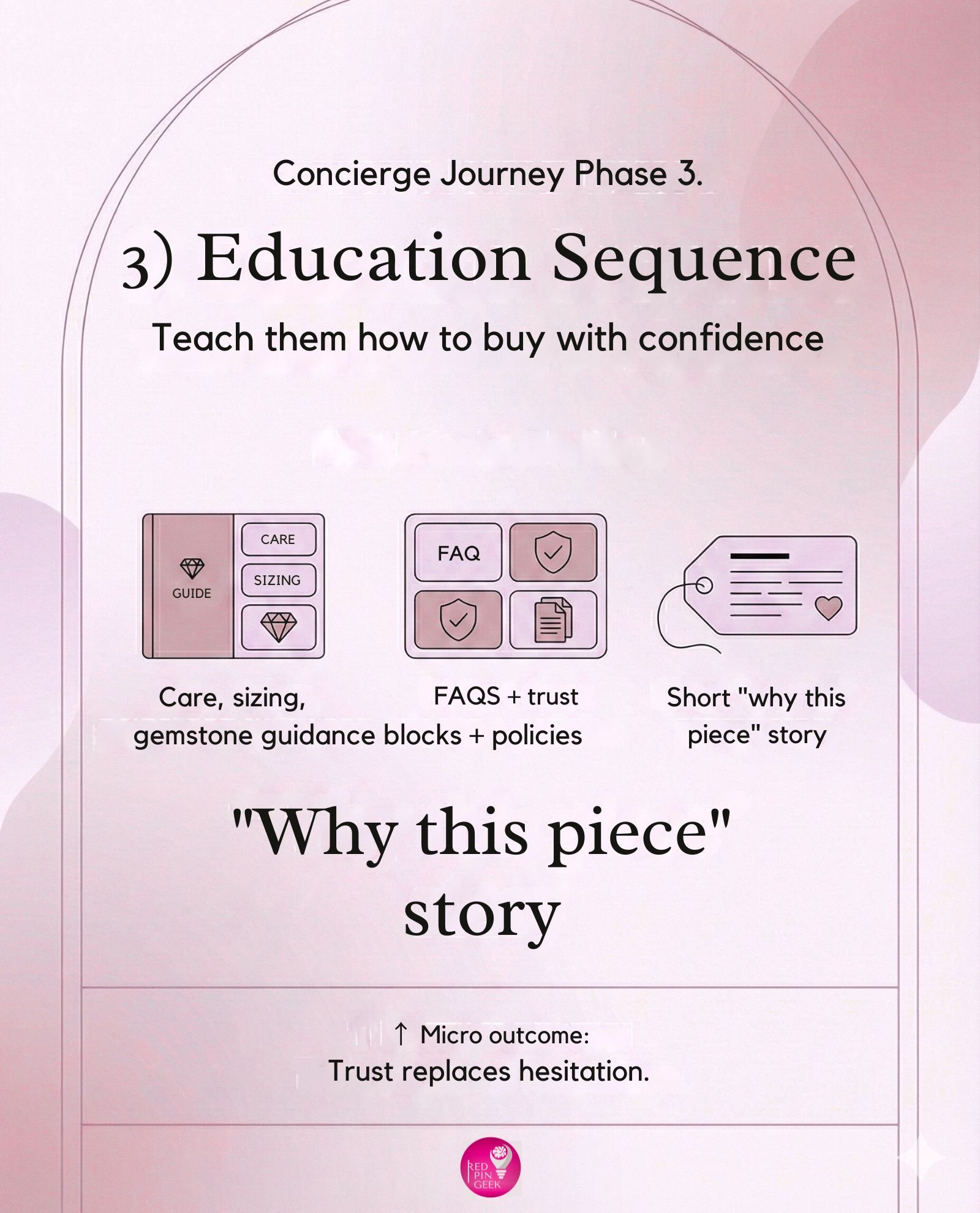
Education Sequence (teach them how to buy, not “buy now)
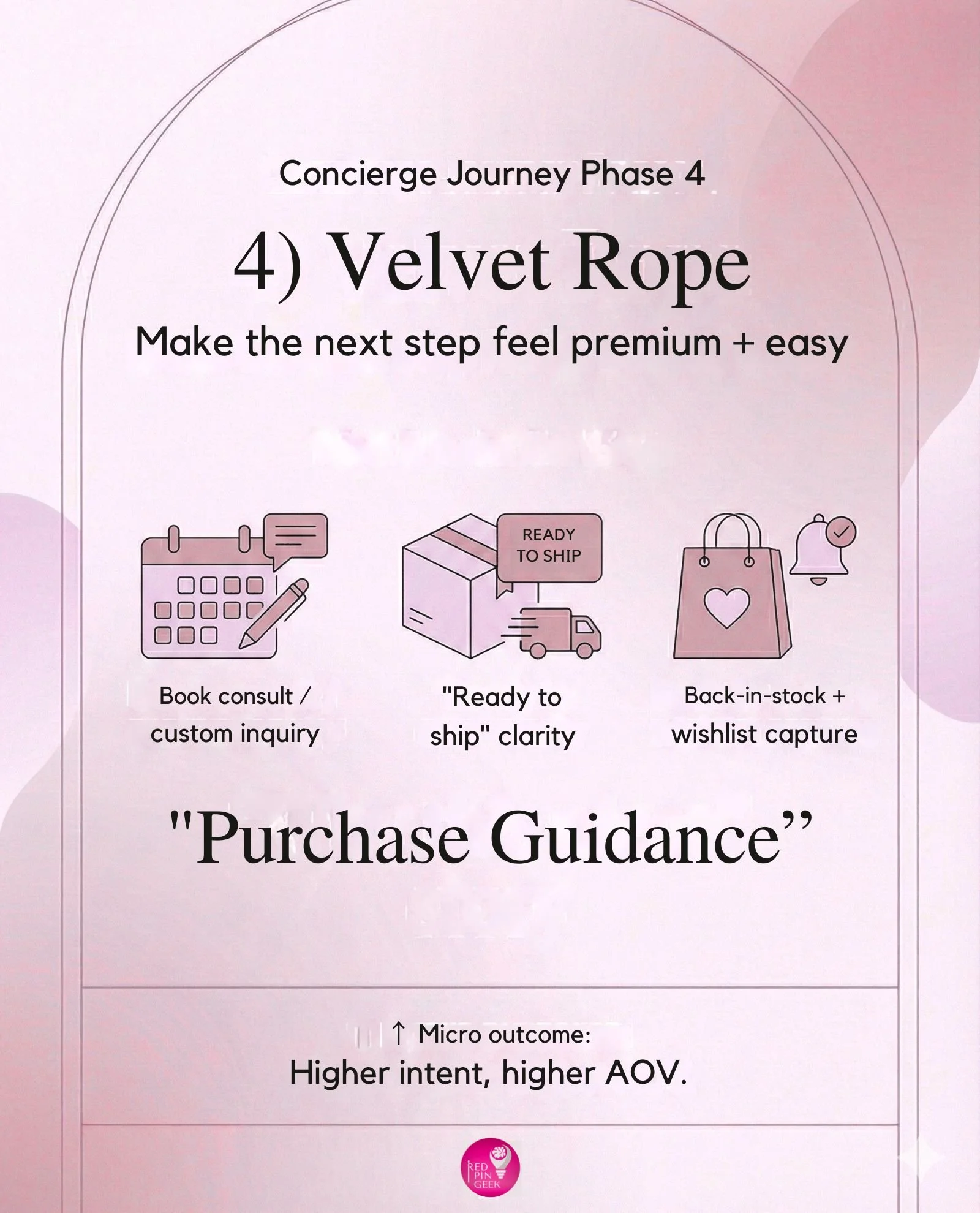
Velvet Rope (qualify serious buyers, protect your time)
Now here’s how that maps to the “conversion systems stack” in terms of rankings and revenue.
System 1: High-intent product pages (conversion + citation magnets)
If your pillar page is the front door, product pages are the cash register. The journey to the cash register should be a curated experience, minus the champagne. 🥂
To make them convert and become AI-ready, each product page needs rich, jewelry-specific content that answers buyer uncertainty:
materials + gemstone specifics
sizing/fit/comfort
care + durability
hypoallergenic notes
styling + wear scenarios
This is the “teach them how to buy” principle from the concierge framework applied at the product level. It also aligns with Google’s guidance to create unique, non-commodity content that visitors from Search and your own customers will find helpful and satisfying. [2]
Add one “story block” per product
Not a poetic paragraph, an origin that proves experience and differentiates you from commodity listings (design intent, sourcing ethos, artisan process). That supports both human trust and AI selection. [3]
Action items (small business budget):
Add a “Details + Care + Styling” accordion under every product
Add a short “Design story” block (3–6 sentences)
Add a “Complete the look” module (2–4 related pieces)
System 2: Structured data + FAQs (your site’s “API” for search + AI)
Let’s pause here. In tech-speak, an API is basically a bridge that lets two pieces of software talk to each other.
It’s a set of instructions that says:
What information can be requested
How to ask for it
and what format the answer will come back in
So instead of one system guessing what another system means, an API gives them a clear, consistent way to request and share data, like placing an order and getting a confirmation back.
Treat schema and FAQs as your translation layer, the part that makes your expertise machine-readable. [4]
Minimum schema stack:
Product + Offer (price, availability, images)
BreadcrumbList (site structure clarity)
Organization + Website (who you are)
Google has explicitly emphasized building content that’s satisfying and useful for search visitors in the AI era, and structured clarity helps systems interpret your pages correctly. [5]
Want to understand schema better? Check out my blog: Why Schema Matters for Jewelry Designers: A Simple Guide to SEO and AI Search.
FAQ blocks are your silent-salesperson. They remove friction at the exact moment buyers hesitate:
“Is gold vermeil waterproof?”
“What gemstones are naturally pastel?”
“Is this safe for sensitive ears?”
“How should I store opal?”
Mark them up with FAQ schema on key category and product pages (use sparingly and only where it truly helps).
Action items:
Add 3–6 FAQs to the Pastel Gemstone pillar page
Add 3–5 FAQs to best-selling product pages
Add breadcrumb schema everywhere
System 3: Lead capture + lifecycle email (turn traffic into owned demand)
This is where the concierge framework becomes a system, not a vibe. Vibes don’t close sales, but we can check them to get into our customers' heads and discover what they truly want.
In the Digital Concierge model, the “Vibe Check” quiz captures a lead and preference data.
Then the “Education Sequence” builds trust without screaming BUY NOW.
That’s exactly how you protect conversion rates when rankings increase top-of-funnel discovery by bringing more researchers in earlier.
High-intent opt-in ideas that match jewelry reality:
“Pastel Gemstone Styling Guide”
“Find Your Best Pastel Stone (Skin Tone + Vibe)”
“Ring/bracelet sizing + care cheat sheet”
“Stacking guide + first set perk”
Browse abandonment (education + reassurances, care, quality, timeline)
Action items:
Add one lead capture specific to the pillar topic (pastel gemstone guide)
Add “notify me”/wishlist micro-conversions to capture emails earlier
The Concierge Model
System 4: Content hub + internal linking (rankings that feed shopping)
This is the part most jewelry brands skip, and it’s why they struggle to rank product collections.
Your pillar page is the hub.
Your product pages are the spokes.
Your guides are the bridges.
In the concierge framework, the Curated Reveal builds “decision pathways” by showing visitors their thing (not everything). Internal linking does the same job for search engines: it shows relationships and relevance. [6]
Topic cluster examples that support “pastel gemstone jewelry”:
“What gemstones are pastel?”
“Pastel vs vibrant gemstones (how to choose)”
“How to style pastel gemstone jewelry”
“How to care for opal/kunzite/aquamarine”
“Best pastel gemstones for various skin tones”
Google’s AI-search guidance explicitly pushes creators toward unique content that satisfies intent deeply, and topic clusters help you do that. [7]
Action items:
Publish 3–5 support guides that link down into the pastel collection pages
Link products back up to the pillar (“Back to Pastel Gemstone Jewelry”)
System 5: Social proof + Ethical Urgency (trust that helps humans and machines)
In jewelry, trust is conversion. Especially for higher-priced items like engagement rings that require extensive consideration.
Reviews and clear policies reduce hesitation, and they’re also signals AI systems may use when deciding which merchants to surface. [8]
What to prioritize:
Reviews that mention durability, comfort, sensitivity, and real wear scenarios
Visible shipping + returns reassurance near CTAs
Limited-run honesty (“one-of-a-kind,” “limited stones”)
Deadline-based shipping clarity (not fake urgency)
Action items:
Add a “Trust strip” near CTA: shipping/returns /repairs/packaging
Add 3–6 review snippets under the add-to-cart area
System 6: Behavioral CRO + analytics (keep improving what rankings unlock)
CRO stands for Conversion Rate Optimization, but you can think of it as making your website easier to shop.
It’s the process of small improvements that help more visitors do what you want them to do, like:
Buy a piece of jewelry
Join your email list
Book a consult
or ask a question about a custom order
CRO usually means watching where people get stuck (like sizing confusion, unclear shipping info, or not seeing the “Add to Cart” button fast enough), then testing simple tweaks to get more of your traffic to become real customers.
When you rank, you get a surge of mixed-intent visitors. CRO is how you turn that attention into sales without losing your brand soul.
Track micro-actions that signal readiness:
add-to-cart
wishlist/save
quiz completion
consult form starts
product → pillar clicks (and pillar → product clicks)
Then you fix the real drop-off reasons:
sizing uncertainty
shipping surprises
unclear “what this is/who it’s for”
lack of reassurance on care/durability
This aligns with the “Post-Click Ecosystem” idea: your site automatically answers repetitive questions, so you can spend time designing rather than endlessly replying to the same emails.
The takeaway for the case study
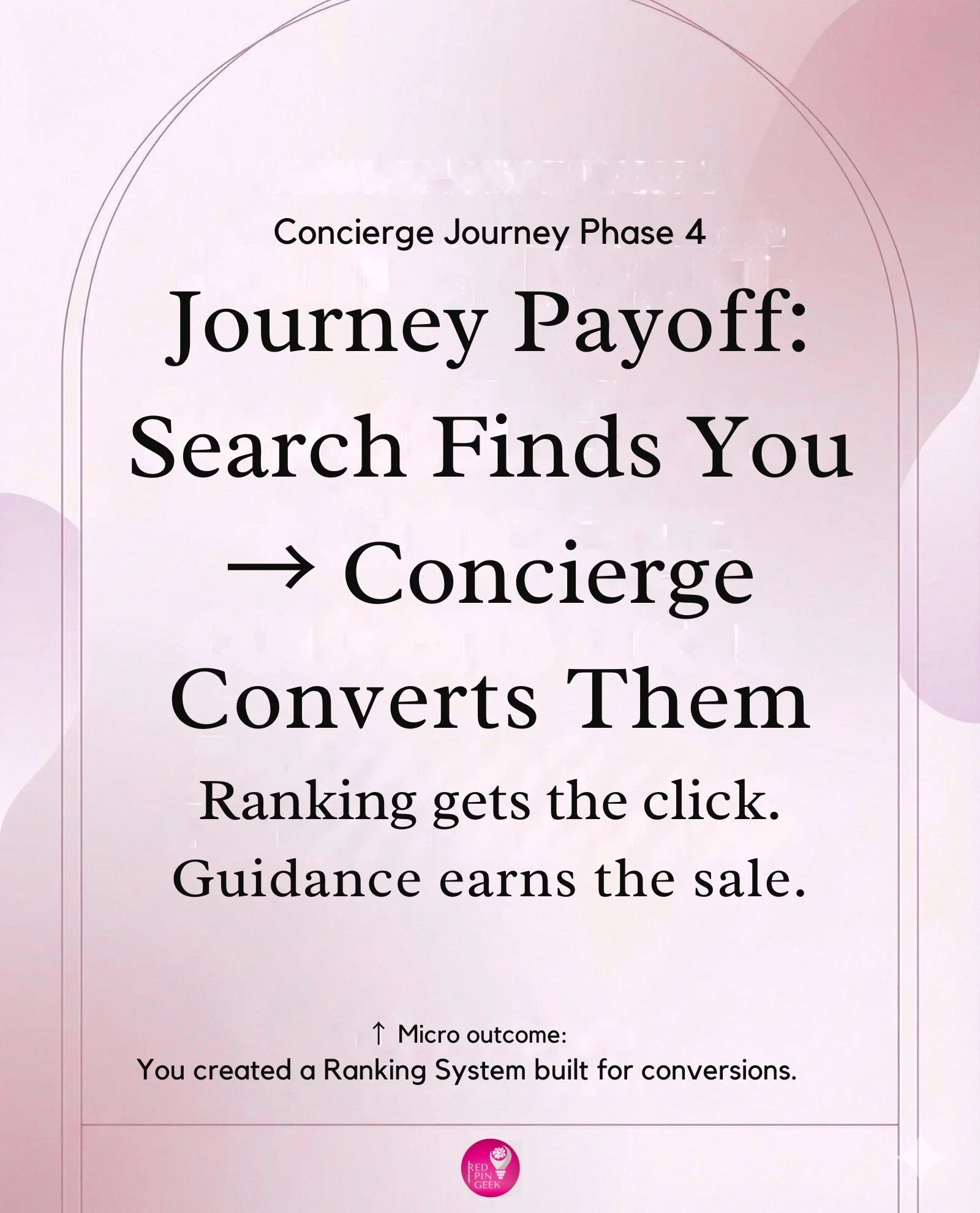
Ranking #1 wasn’t just an SEO win. It was a system win:
The pillar page created topical authority and became the “default answer.”
The concierge layers (quiz → curated reveal → emails → product pages) turned discovery into decisions.
Structured data + FAQs made that expertise easy to interpret for search and AI systems. [9]
The result: rankings that didn’t just bring traffic, they brought the right kind of attention and supported higher-value purchases.
Check out my Case Study employing this framework and find out how I ranked number one of Google, Bing, and DuckDuckGo.
Now you understand the nuance required to convert your traffic. If all this seems scary, take a breath. You don’t need to change everything today. Break down this framework into smaller steps and take one task at a time. The most important takeaway is to start getting into the mindset of building a conversion system. Create repeatable workflows for uploading new content, collections, and products. You can steal my workflow below.
Ready to Fix Your "Sales Framework?"
The “Digital Concierge System” is just one part of the puzzle. Even if you set up your system perfectly, you still need the architecture to guide them to a purchase.
If you are tired of guessing and want a site that is built to attract, interpret, and convert your ideal Search Personas automatically, you might be ready for a full system rebuild.
Apply for the Post-Click Growth Architecture™ Service. Turn your visibility into clarity, trust, and revenue.
Not ready for a full rebuild? Start by downloading the Product Page Rewrite Template in the DIY Resource Library.