SEO Changes & Why They Matter for Jewelry Brands in the Age of AI:
A Guide to Future-Proof Your Website
SEO Is Moving From Traditional Search to AI Systems
Have you been avoiding SEO altogether? Perhaps you’ve dipped your toes in a little but then got stuck on implementing. I get. Online marketing is a big ask for those who love being in the studio and just want a simple way to sell their creations, let alone take on the overwhelming technical strategies underpinning SEO.
As a user, you’ve probably noticed the search experience is changing. These changes are impacting how brands are discovered. AI is cutting organic clicks in half (or more), and traffic has decoupled from simple visibility. So, if you’ve been feeling like “SEO is broken” for your jewelry brand, you’re not imagining things. Between Google’s 2025 AI updates, AI Overviews (GAIO), and Search Generative Experience (SGE), the rules of discoverability have changed. [1]
You have to earn clicks, especially for considered, emotion-driven purchases like fine and artisanal jewelry. The good news is that the clicks you earn are high-intent and are more likely to convert once users land on your site.
The real shift? SEO is no longer a bolt-on tactic you fix after launch or even after. It’s infrastructure, the invisible system that determines whether your brand is even eligible to show up in AI answers, organic search, Google Discover, and local results.
What is jewelry SEO?
Jewelry SEO is the work of making a jewelry brand findable and recommendable online, so that search engines and AI tools surface your pieces when a shopper is looking. In the AI era it means two things at once: ranking in Google, and being the store an AI recommends by name when someone asks for a gift.
Last updated: July 2026 • The source engineering method, tested on my own store first
Unprecedented Consumer Adaptation to AI
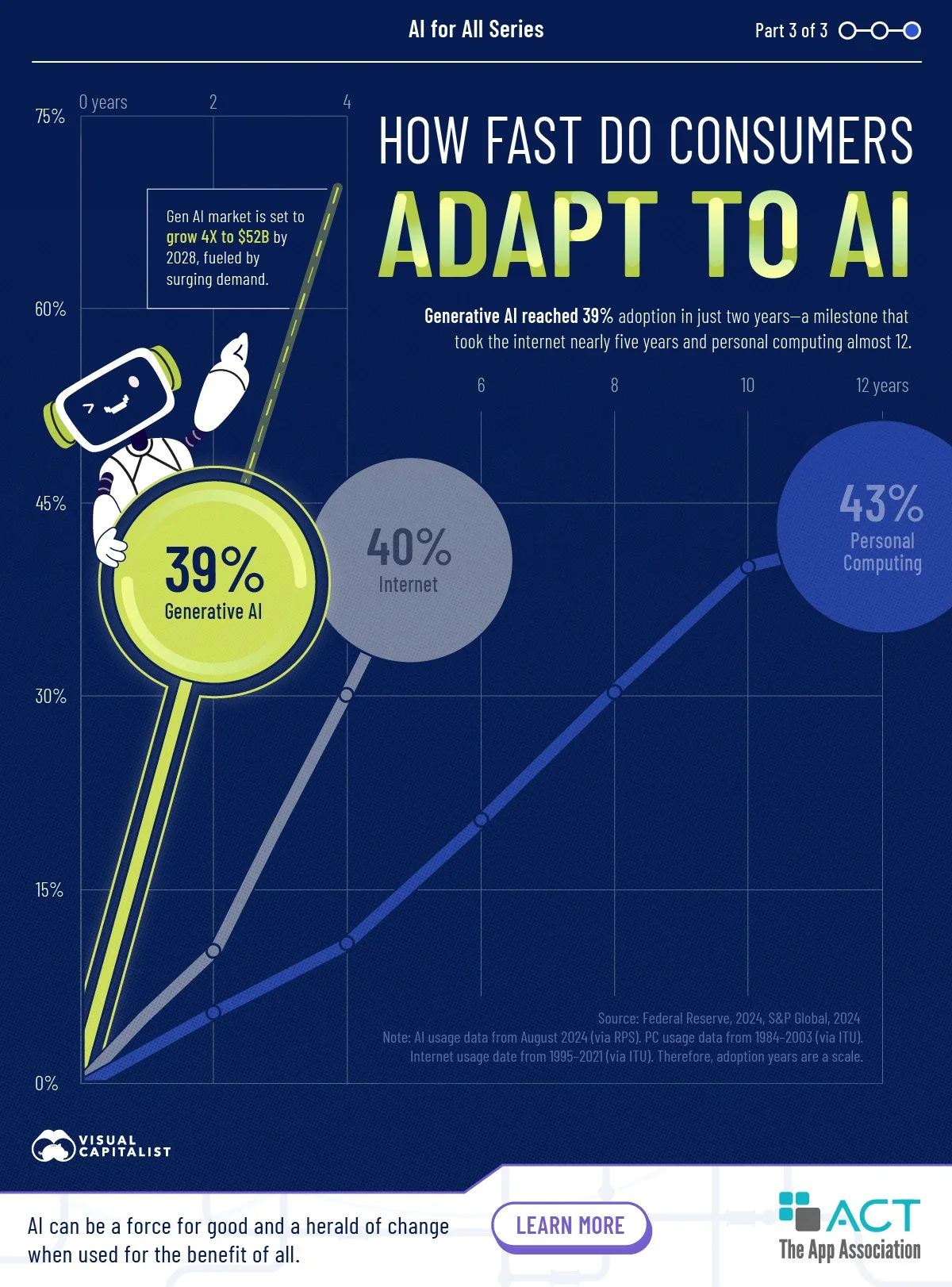
What is driving this shift? To put it simply, we, the consumers. Generative AI, the same technology used for conversational queries and other tasks, has reached 39% adoption in just two years. Think about how widely used the internet and personal computing are today. The time it took for users to embrace the internet was over double that, and for personal computing, nearly quintuple, taking nearly twelve years to be widely accepted.
Data from the Federal Reserve Bank of St. Louis shows that nearly 40% of U.S. adults aged 18 to 64 already use generative AI, with almost a third using it many times a week. [2]
Reading Now
1. What Actually Changed in Search (and Why Jewelers Feel It So Hard)
2. SEO Is Not a Tactic, It’s Growth Infrastructure for Your Brand
3. The New Ranking Currency: E-E-A-T for Jewelry
4. Stop Chasing Keywords. Start Serving Intent
5. Product Pages as Expert Micro-Articles (Not Thin Catalog Entries)
6. Why Tools Beat “More Blogging” in the AI Era
7. Visual, Discover, and Local SEO: Where Jewelry Brands Can Shine
8. Case Study: Turning Bohemi into an Engagement Ring Authority
9. E-E-A-T Audit Checklist for Jewelry Brands
Proven, not promised
The same methods, tested on my own brand first
Every strategy in this guide I ran on my own jewelry store before a single client paid me for it. Here is what it produced.
Andrea Li Designs
I published one pillar page for my own jewelry store.
Bohemi Fine Jewelry
A local jeweler, rebuilt into a national engagement-ring authority.
Andrea Li Designs
The proof the machines can now read the brand on their own.
Red Pin Geek
I ran my own visibility diagnostic on my own site.
Cited in the same Perplexity answer, alongside Stripe, Mastercard, and McKinsey.
Every number here is real, dated, and published. That is the difference between being listed and being recommended.
A 60-second gut-check
Storefront, or warehouse?
Six things most jewelry designers believe about getting found online. Tap Myth or Reality, and see what actually wins with Google and with the AI tools your customers now ask.
Based on recent data from 2025, while traditional search engines like Google still process the vast majority of total query volume, a significant and growing segment of users now start their discovery process on generative AI platforms.
24% of U.S. consumers now start their search journey on ChatGPT rather than a traditional search engine. This figure rises to 28% for Gen Z users. [3]
77% of users report having used ChatGPT specifically as a "search engine" to find information. [4]
21% of all prompts entered into ChatGPT are classified as "search-like" (seeking information rather than creative generation), which amounts to approximately 66 million search-intent queries daily.
Why does this matter for you? Google’s established infrastructure, distribution, and brand will remain dominant, but with the rise of AI Chat platforms like ChatGPT, there are now multiple entry points into search. You are no longer optimizing for a single platform; like Google, you now need to consider investing in a multi-channel approach as a complement to Google. To frame this in terms of familiarity, think about the various social platforms you use to market your business. The core of your content remains constant, but your messaging varies from platform to platform.
“We now know buyers trust AI’s recommendations. Obviously, there’s a high risk here if the AI is wrong, but seeing how quickly buyers take the AI’s recommendation also shows us how fast consumers adopt AI. It truly is the future of Search.”
AI and jewelry search, 2026
How customers find jewelry now
Search did not disappear. It split. People still Google, and more and more of them ask an AI where to buy. Here is what the data says for an independent jewelry brand, and why right now is the moment to act.
01 · The shift
Shoppers have brought AI into the buying journey
of people now use AI to shop. They ask ChatGPT, Claude, or Gemini to compare, explain, and recommend, often before they ever reach your site.
Source: Exploding Topics / Search Engine Land, 2026.
02 · Your buyer especially
The people who can afford your work use AI the most
The fact that you may not personally use ChatGPT to research a purchase does not mean your customers share that habit. The higher-income buyer you design for is often the one using AI the most.
Source: Menlo Ventures / Morning Consult, 2025 State of Consumer AI.
03 · The opening
But barely anyone is using AI to shop for jewelry yet
Only about a quarter of AI shoppers have used it for jewelry so far. That gap is your first-mover advantage. Most of your competitors are not optimizing for AI visibility, so the brands that move now win an outsized share as the category catches up.
Source: Exploding Topics / Search Engine Land, 2026.
04 · Why ranking is not enough anymore
Search is going zero-click
of Google searches now end with no click
end with no click when an AI Overview appears
end with no click in Google's AI Mode
When the AI answers the question, most people never click a link. So being the brand the AI names and recommends now matters more than ranking a page nobody clicks.
Sources: SparkToro / Datos, 2024 to 2025; Semrush AI Mode study, 2025.
05 · What gets your jewelry recommended
Your photos are stunning. An AI cannot read a photo.
AI reads the words and the structure of your page, not the beauty of the image. Four things move a jewelry page from invisible to recommended:
1
Name a price
Pages that state a price are far more likely to be surfaced and recommended by AI. Silence reads as unavailable.
2
Put the real details in words
Materials, stone, technique, dimensions, provenance. The specifics your photo shows but your text never says.
3
Make it machine-readable
Structured tags behind the page tell AI what the piece actually is, so it can describe you back to a shopper.
4
Be recommended, not just listed
Named, dated proof (real results, real reviews) is what turns a page an AI can find into one it will vouch for.
06 · Proof it works
This is not theory. I test it on my own store first.
#1
One pillar page for my own jewelry brand ranked number one on Google, Bing, and DuckDuckGo in about a month. Visits up 206%, revenue up 89%.
92
A client's site is now cited on 92 pages across AI systems like ChatGPT, from a standing start, with zero paid ads.
The rest of this guide shows you how to do it on your own store. Keep reading.
The "Primary Source" Shift
For those who have already adopted AI tools, the shift is even more dramatic. A 2025 McKinsey survey found that among users of AI-powered search, 44% now consider it their primary and preferred source for information, topping traditional search engines (which sat at 31% for this specific group). [5]
Why Users Start on AI
Users are bypassing Google for specific types of queries where direct answers are preferred over a list of links:
Summarizing complex topics: 54% of users prefer AI for this.
Creative/Open-ended questions: 81% prefer AI for brainstorming or nuanced queries.
Product Discovery: 36% of users have discovered a new brand or product via ChatGPT.
These changes in search behavior are forcing Google to adapt to meet users where they are and where trends are heading. This is great if you’re new to SEO because now you can leverage these changes with a fresh start in how you should approach it.
SEO is still relevant, but now includes an AI layer for optimized visibility as we usher in a new era of how consumers find you.
This pillar guide breaks down what changed, what Google now rewards, what gets AI citations, and how jewelry brands can rebuild their websites as authority-driven, AI-ready ecosystems, without needing a developer background. If you are interested in more strategic technical deep-dives that are easy to understand, including step-by-step implementation guides, custom tools, and more, for my premium Substack subscribers. Want the proof? In a controlled study across three brands, AI cited the pages that were built for a topic and stayed silent on the ones that weren't.
Related Resource
Stay ahead of the future of online shopping. Learn about Agentic Shopping.
👉 Read Now: How big tech is changing the way we shop
1. What Actually Changed in Search (and Why Jewelers Feel It So Hard)
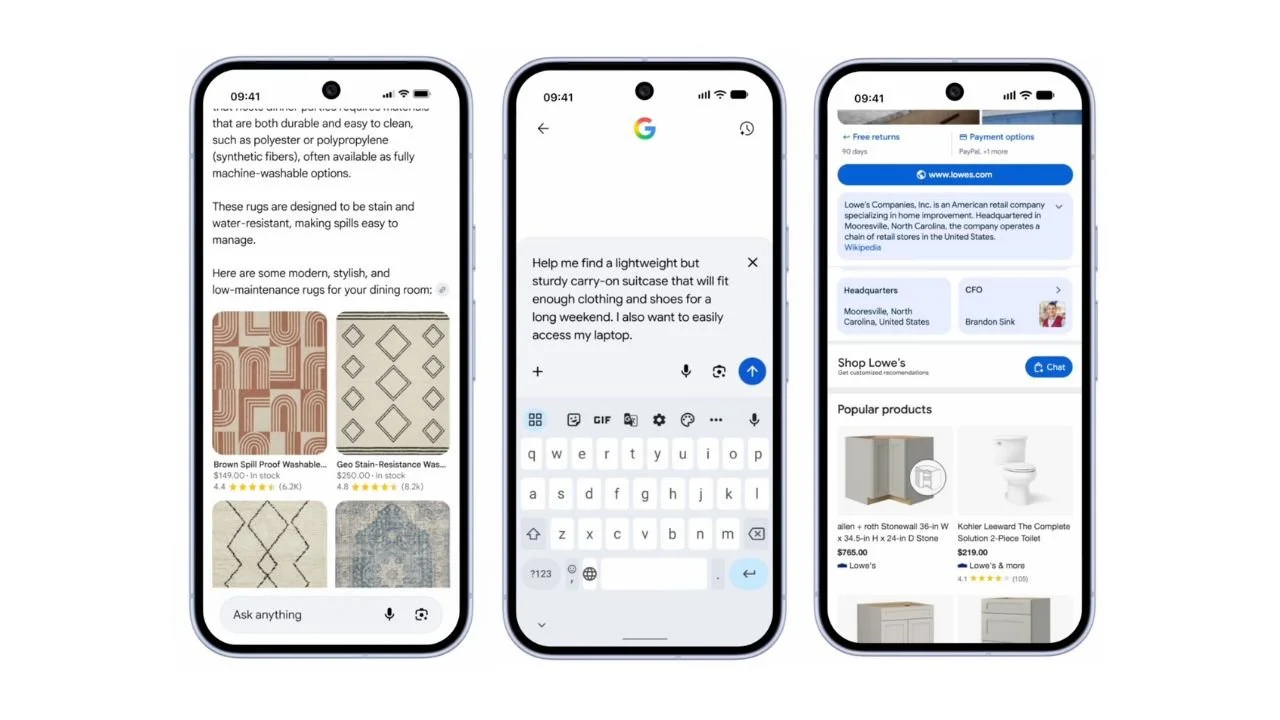
Google’s recent updates didn’t just “tweak rankings”; they reweighted the entire system around helpfulness, authority, and structure, then layered AI on top of it. It’s been a busy year as big tech companies compete to be the top dog in the AI space, and Google seeks to keep its monopoly on search. I anticipate this space will remain dynamic as innovation continues to drive the marketplace changes, but don’t worry, I’ll be monitoring these changes closely and bringing them to you as they roll out.
Here’s what’s different now:
Key 2025 Search & AI Changes for Jewelry Brands
October 2025 Core Update
Prioritizes high-quality, authoritative, updated content. Think quality over quantity.
Thin product descriptions and generic blogs quietly lose visibility.
AI Mode & Search Generative Experience (SGE)
Users see Gemini-powered, conversational answers before traditional results.
If your brand isn’t clearly cited in structured data or trusted sources, it effectively disappears from the “AI layer.”
AI Overviews (GAIO)
Google assembles short, data-rich answers that name specific brands and products with complete, trusted information.
Incomplete schema or inconsistent or no reviews = much lower chance of inclusion.
Local SEO Changes
Google Business reviews and NAP (Name, Address, Phone) consistency matter more for local jewelers.
If your profiles are neglected, you lose showroom foot traffic.
Mobile-First & Visual Emphasis
Mobile UX, fast load speeds, and responsive galleries are now table stakes.
Google Discover and AI results favor mixed media: imagery, short video, interactive tools, and contextual alt text.
Translation for jewelers:
You can’t rely on “pretty pictures + basic product specs” anymore. The brands winning in this environment are the ones pairing storytelling and education with clean, structured data that AI systems and search engines can actually read and trust.
2. SEO Is Not a Tactic, It’s Growth Infrastructure for Your Brand
Most businesses still treat SEO like a checkbox: “We’ll add keywords later.” That mindset is exactly why their visibility collapses with every algorithm change. Creating an SEO/AIO content ecosystem that broadens your topical authority helps ensure your visibility footprint remains stable and makes a seamless customer journey experience for your website visitors.
In reality, SEO is infrastructure:
It’s how your entire website presence is structured so humans and machines can understand what you do.
It’s the connective tissue between product, content, marketing, and customer journey, not just blog posts.
It’s the system that reduces customer acquisition costs (if you’re running PPC campaigns) by meeting people exactly where they are in their buying journey.
When SEO is embedded into:
how you plan collections uploads,
how you design product pages,
how you write guides,
how you implement schema and site architecture…
…your website stops being “an online catalog” and becomes a scalable growth engine that compounds visibility over time.
For jewelry brands, where purchases are emotional, researched, and often high-ticket, this shift from “SEO as tactic” to “SEO as infrastructure” is not optional. It’s survival.
Case Study
See how I applied modern SEO and AI visibility strategies for my new jewelry collection to rank on search engines and how it boosted my results.
👉 Check out my case study: How I Ranked #1 on Google, Bing, and DuckDuckGo (Without Ads)

3. The New Ranking Currency: E-E-A-T for Jewelry
Google’s AI systems lean heavily on E-E-A-T: Experience, Expertise, Authoritativeness, and Trustworthiness. Weak pages usually aren’t failing because they lack keywords; they fail because they don’t prove why anyone should trust you. This is of paramount importance for higher-ticket luxury items, such as jewelry, which require much more consideration than most purchases. If you earn trust, you earn conversions. Your website should be a sales machine that never sleeps, but that doesn’t happen without thoughtfulness, intention, and going the extra mile that your competitors are not.
How E-E-A-T Looks on a Jewelry Site
Experience
Real-world insights: where you source stones, how you hand-fabricate a setting, what you’ve learned after 10+ years at the bench.
Behind-the-scenes studio photos, process videos, and first-person stories (“When I was designing this collection…”).
Expertise
Clear author bios on guides and educational content (e.g., “Designer & Goldsmith,” “GIA-trained Gemologist”).
The author schema and credentials are clearly tied to your content.
Authoritativeness
Features or mentions in jewelry, bridal, fashion, or art publications.
Backlinks from reputable sites, not random directories.
Trustworthiness
Transparent policies (shipping, returns, resizing).
Secure site (HTTPS), visible contact details, verified reviews, and accurate pricing information.
If your website feels anonymous, generic, or doesn’t add anything new to the conversation with a unique perspective, AI has no reason to pick you as “the answer” in an AI Overview, even if your work is incredible.
| Do it yourself | Work with Red Pin Geek | |
|---|---|---|
| Cost | Your time | From a $97 Snapshot audit |
| Speed | Weeks of learning | Done in days |
| Method | Piecing together blog advice | The exact method I test on my own store first |
| Best for | Technical and time-rich designers | Designers who want it done right, and fast |
4. Stop Chasing Keywords. Start Serving Intent.
The biggest mindset shift: Search is no longer about reacting to keywords. It’s about anticipating and serving intent. Google wants to understand things, not strings, and the contextual connection between them. Remember, queries are more conversational using long-tail and niche keywords. Users are asking nuanced questions about a personal scenario they want to solve with unique specificity.
This is great for small brands that were once lost in a sea of chasing high-ranking keywords, like ‘diamond rings’, that bigger brands had already capitalized on, making it nearly impossible to get visibility. This makes it easier to lean into what really makes your brand different. Your audience is out there, and with search behavior changing, it’s creating a stage for your brand voice to be heard. Now is the time to seize this moment.
Jewelry shoppers aren’t just typing “opal ring” anymore. Their queries look more like:
“Meaning of green amethyst pendant for renewal for someone recently divorced”
“Witchy engagement ring with a salt and pepper diamond that’s durable enough for everyday wear”
“Ethical sapphire engagement ring for September birthdays in a low-profile setting”
To show up, your site needs to answer these deeper questions:
What does this gemstone mean?
Who is this design for?
How does it fit into their lifestyle, values, and aesthetic?
What trade-offs should they know about (durability, care, price, sourcing)?
This is where intent-first information architecture comes in: organizing your site and content around buyer questions and personas, not just product categories.
5. Product Pages as Expert Micro-Articles (Not Thin Catalog Entries)
In 2025, your product pages are the biggest missed opportunity, and the fastest way to become an authority in AI Overviews. Think about it: if you're providing rich content on your product pages, this not only elevates the customer experience for increased conversions, but also gives LLMs more context when selecting which products to surface in citations. That’s a win for your website visitors, the bots, and most importantly, you.
Instead of:
“14k rose gold ring with 1.5ct morganite stone.”
Think of each product page as a micro-article that answers everything a serious buyer (and an AI system) needs to know.
Micro-Article Product Page Framework
Lead with Meaning, Not Specs
Old: “Amethyst engagement ring.”
New: “Lavender amethyst engagement ring for calm, spiritual energy and timeless style.”
Old: “14k rose gold, 1.5ct morganite.”
New: “Crafted in 14k rose gold, this 1.5-carat morganite glows with peach-pink warmth, symbolizing divine love and emotional balance.”
Use Conversational Sub-Headers & Micro-Answers
Break content into Q&A-style sections that mirror real searches:“Who is this ring perfect for?”
“What’s the meaning of morganite?”
“How do I care for this stone?”
“Is this a good everyday ring?”
Layer in Structured Data (Your ‘Data Handles’ for AI)
Implement and validate:Product schema: name, brand, material, gemstone, carat, availability, price.
Review schema: embed keyword-rich reviews mentioning fit, color, occasion.
FAQPage schema: encode your Q&A section so AI Mode & GAIO can lift those answers directly.
Deep Dives from the Blog
See these concepts in action
- The 4-Layer Product Page: What 815K Queries Reveal for AI The research-backed product page architecture — and what happened when I tested it on 10 real products.
- Machine-First Architecture for Makers Why your website needs both a storefront and a warehouse layer, and the four pillars that make it work.
- Source Engineering, Not Prompt Engineering What three independent studies reveal about AI visibility — and why engineering the source beats engineering the prompt.
- Ask AI: See What 3 AI Models Say About Us Real, unscripted responses from Claude, ChatGPT, and Perplexity. No prompt tricks.
Show Real Experience Inside the Product Story
Why you chose this stone.
How you designed or engineered the setting.
Any ethical or sourcing decisions you made.
Optimize Visuals for AI & Humans
Use detailed alt text:
“Close-up of green amethyst pendant set in recycled gold, symbolizing renewal.”Add lifestyle photos that show scale, movement, and context.
Where possible, embed a short video and tag it with VideoObject schema.
Stack Reviews & UGC That Add valuable Information
Think about the most useful Amazon reviews that include contextual details and product use across different scenarios. Encourage buyers to mention:Why they bought it (“for my spring wedding,” “as a birthday heirloom”).
How it feels to wear.
Any compliments or reactions they received.
Done right, each product page becomes a mini “authority hub” for a specific intent, something AI systems can confidently surface in Overviews. Plus, it adds something new to the conversation, building a “verification layer” into your content with expert POV’s, community examples, and unique takes.
Take this Reddit post, which perfectly encapsulates the essential features to optimize product pages for SEO/AIO.
Recent Reddit post on what was ACTUALLY making their competitor rank:
• Internal linking structure is insane
• User intent is perfect
• They answer questions ON the product pages
• Image optimization is next level
• The secret weapon: Customer photos
6. Why Tools Beat “More Blogging” in the AI Era
A slightly contrarian view: you don’t need another “Ultimate Guide” to win in 2025. You need tools.
AI systems and human buyers are both tired of generic text. They want:
Clear comparisons.
Simple calculators.
Step-by-step selectors.
Visual guides.
For one of my clients, Bohemi (an alternative engagement ring brand), we didn’t just write about pricing. We built a custom interactive pricing calculator that lets buyers explore how metal choice, stone, and setting impact investment.
Because the logic is structured and explicit, LLMs can easily parse that tool to answer queries like:
“How does metal choice affect engagement ring price?”
“What’s the price difference between lab-grown and natural diamonds in a solitaire?”
Result: That tool became a bridge between education and action, supporting a 29% year-over-year increase in conversion rate and improving inclusion in AI-driven results.
The takeaway: Don’t just tell Google you’re an expert. Build what an expert would build.
7. Visual, Discover, and Local SEO: Where Jewelry Brands Can Shine
Because jewelry is inherently visual, you have a natural advantage if your visuals are optimized for AI understanding, not just aesthetics. Yes, compelling imagery is still a must for humans, but you need to add a contextual layer for robots as well.
Visual & Discover SEO Essentials
Alt Text with Context (bonus: this also helps with your site’s accessibility)
Not: “ring on hand.”
Instead: “oval salt and pepper diamond engagement ring on hand, witchy boho styling with black manicure.”
Short-Form Video on Key Pages
20–60 second clips: how it moves in light, how it stacks, how it looks outdoors.
Mark up with VideoObject schema to increase eligibility for richer results and Discover.
Lifestyle & Storytelling Imagery
Show your buyer personas: minimalists, bold romantics, witchy aesthetics, classic bridal.
Use these to align with intent-based queries (“witchy engagement ring,” “minimalist bridal set”).
A short-form video included on my Signature Collection product page showing how the facets sparkle in the light.
Local SEO for Brick-and-Mortar-Based Brands
Fully complete and maintain your Google Business Profile.
Keep NAP (name, address, phone number) details consistent across the web.
Actively request and respond to reviews.
Add photos regularly, not just of your product, but of your studio, bench, and team.
Local and visual signals now feed into the same AI ecosystem that powers GAIO and Discover, strengthening your overall authority footprint.
8. Case Study: Turning Bohemi into an Engagement Ring Authority
When I led the strategic redesign for Bohemi, we made a deliberate shift from “pretty site with many products” to an authority-driven engagement ring ecosystem.
Key changes we implemented:
Intent-First Site Architecture
Collections re-organized around personas and use cases (e.g., “Witchy/edgy”, “Botanical/romantic”, “Geometric/modern”) instead of only metal or stone.
Created themed content hubs like the Nyx Collection for witchy/edgy/alternative brides.
Micro-Article Product Pages
Rewrote product copy to highlight meaning, symbolism, custom options, and relevant product recommendations.
Custom Schema & Technical Infrastructure
Mapped and implemented tailored JSON-LD beyond Shopify’s defaults for:
About Page
Collection Pages/Guides
FAQs
Interactive Tools (like the pricing calculator)
Ensured everything validated in Rich Results tests.
Persona-Based Authority Content
Created content around niche queries like “witchy engagement rings” and “boho engagement rings,” supported by relevant educational blog posts, client stories, products, and imagery.
Results:
39% increase in impressions and growing presence in AI-generated answers for alternative stone and style queries.
53% increase in organic sessions and a 38% lift in total sales after the authority-driven redesign.
New traffic from high-intent, persona-aligned phrases, without trying to compete for “diamond engagement ring” against big box retailers.
This is what it looks like when SEO is treated as infrastructure, not a last-minute tactic.
9. E-E-A-T Audit Checklist for Jewelry Brands
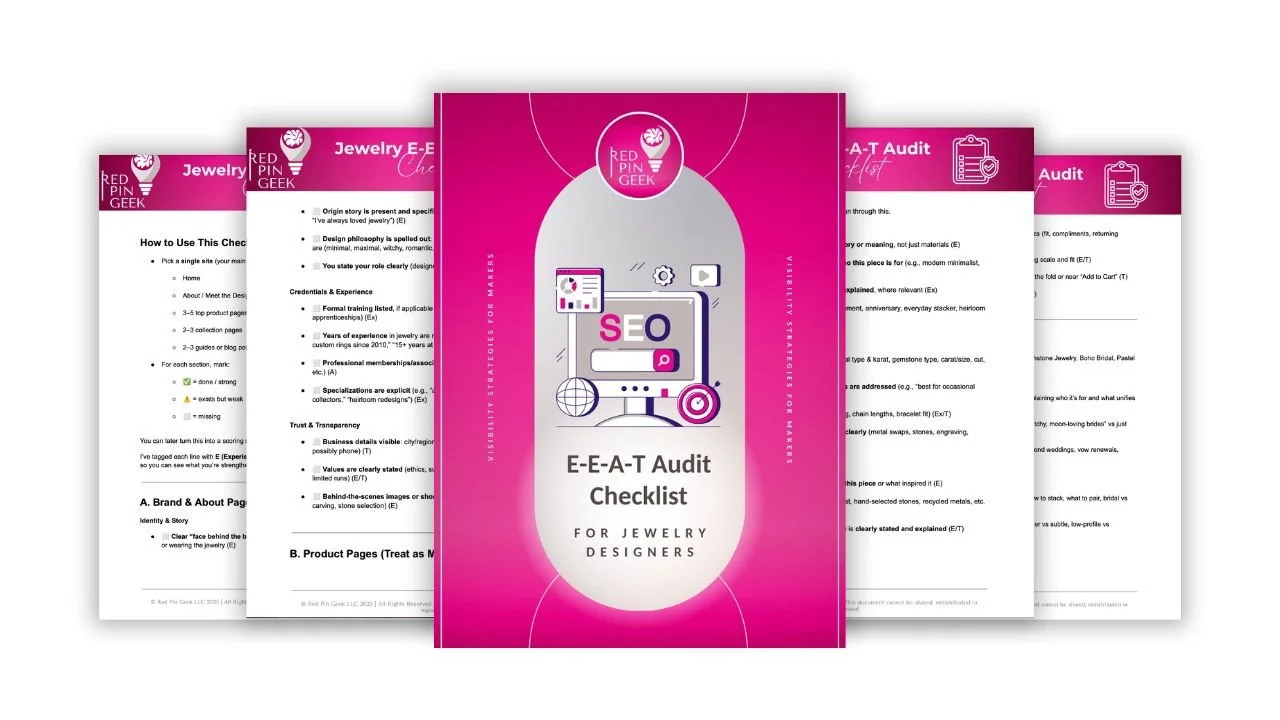
Before you create anything new, you’ll get the fastest wins by fixing what you already have. Here’s a simplified version of the audit framework I use for jewelry clients and my own jewelry brand.
Highest-Priority Fixes (Start Here)
Add clear author bios (your about page) and roles (designer, jeweler, gemologist) to guides and blog content.
Inject real experience into product and collection pages: sourcing stories, process notes, design philosophy. At the very least, be sure to capture this in client success stories.
Integrate rich, keyword-specific reviews and testimonials sitewide.
Make sure you have visible, trustworthy business info (About, Contact, policies, secure checkout).
Document ethics and provenance: where stones come from, metal purity, and sustainability choices.
Next Level: Authority & Trust Builders
Implement Product, Review, FAQPage, and Author schema across key pages.
Cite and link to trusted sources (GIA, AGS, reputable publications) in your educational content.
Highlight any press features, awards, or professional memberships.
Keep content fresh with “Last updated” timestamps and periodic revisions.
Ongoing Support Signals
Strengthen internal linking between product pages, guides, and collection hubs.
Use unique image and video assets with descriptive alt text (no stock photos where it matters).
Reduce intrusive pop-ups or confusing CTAs.
Ensure mobile-friendly, accessible design.
By applying this audit, you turn underperforming pages into credible, experience-rich assets that align with Google’s Helpful Content and E-E-A-T expectations, and make your brand more compelling to human buyers at every step.
10. Your Action Plan: Where to Start (Without Overwhelm)
If you’re a busy jewelry brand owner wearing all the hats, here’s how to sequence this work so it actually gets done. If I’m honest, implementation for my own brand can be slow because I have to squeeze these into the small gaps between client projects. You likely have similar bandwidth because you wear all the hats, plus let’s be honest, life has its own constraints. My recommendation is to simply stay consistent as your time allows. I’ll go more in-depth in future posts to guide you and provide tools to cut your time investment. Here’s your 50-foot view of your action plan.
Foundation & Audit
Inventory your main product, collection, and blog/guide pages.
Run a quick E-E-A-T check using the checklist above; flag obvious weak spots.
Product Page Transformation
Choose your top 10–20 revenue-driving or signature pieces.
Rewrite them as micro-articles with meaning-led copy, Q&A sections, and updated visuals.
Add or fix Product, Review, and FAQ schema.
Architecture & Intent
Group collections by personas, occasions, and aesthetic styles, not just metal or stone.
Create 1–2 content hubs that align with your biggest buyer journeys (e.g., “Alternative Engagement Rings,” “Birthstone Fine Jewelry”).
Visual & Local Optimization
Update alt text across top pages. Use this free Ahrefs Alt Text Generator
Add short videos where possible.
Example video:
Clean up Google Business and start proactively collecting reviews.
Build One Signature Tool
Start with a simple, high-impact tool: a pricing calculator, ring profile selector, gemstone guide, or gift finder.
Treat it as both a conversion aid and an AI-readable asset.
Measure, Learn, Refine
Track impressions, clicks, and conversions in Search Console and analytics over 30–90 days.
Iterate based on what’s gaining traction.
11. Want the Deep Dive?
If you’re ready to move from “random SEO tips” to an SEO infrastructure that supports your jewelry brand’s growth, I’ve created resources specifically for this AI-driven era for premium Substack subscribers:
Topic-First Funnel Builder Assistant - A friendly assistant that helps creative small business owners build a topic-led, customer-journey-optimized content plan that fuels visibility and conversions—without the SEO overwhelm.
Keyword Priority Pool Assistant - For small creative business owners to get actionable insight from their OWN experience, gain confidence for what to write or create next, and a clear content roadmap based on alignment with their audience.
CustomGPT Optimized Product Page Template Assistant to analyze any product page URL It will analyze the page and provide you with a personalized template with rewritten product descriptions to copy and paste, alt-tag suggestions tailored to your product, a done-for-you Q&A section, internal linking suggestions based on the content on your website, Structured data (JSON-LD) guidance with customized snippets, and other recommendations to level your page up. All to help you stay actionable.
For free Substack subscribers, you still have access to content where I go deeper into:
AI search changes for jewelry
Strategy for adapting to these changes
Product Page Rewrite Template built for AI Overviews and high-intent buyers
Internal Link Mapping Mini Workbook
More resources for actionable implementation, available only to free Substack subscribers.
Common questions