
Pinterest Strategy Resource Hub
The Modern Pinterest Strategy Guide: 5 Data-Backed Shifts for Creative Businesses
Introduction: The Rules Have Changed
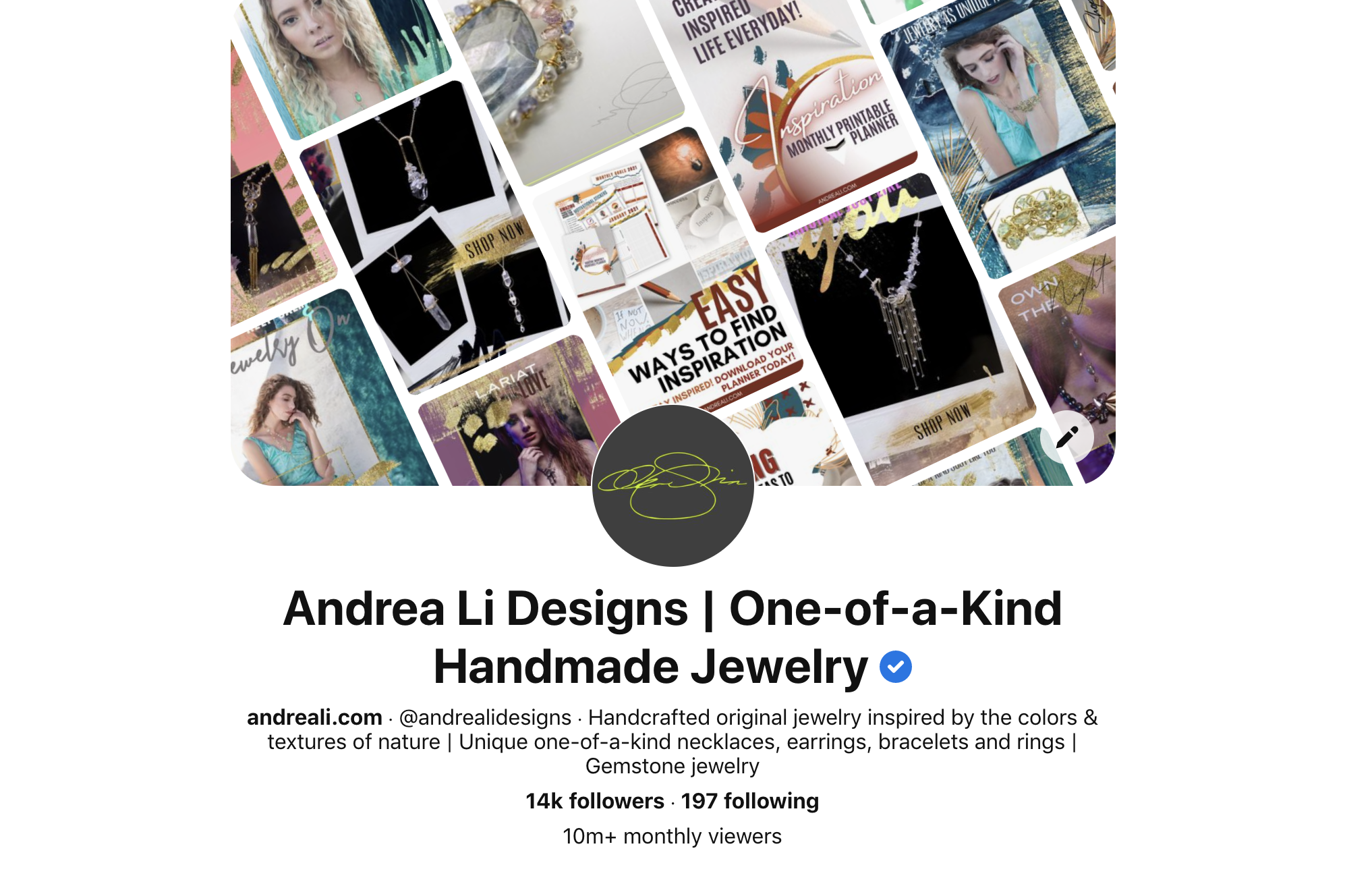
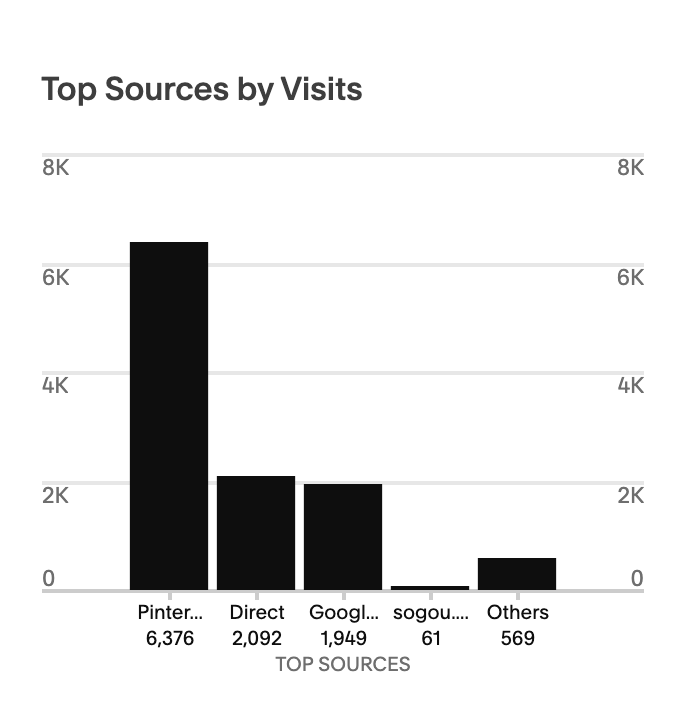
I’ve been around the block with Pinterest. Things were simpler back when I started, when direct effort yielded direct results. These were the days in 2017 when I was gaining hundreds of new followers a day, receiving over 10 million monthly views, and thousands of website visitors a month. This success was too good to keep to myself, hence Red Pin Geek was born.
Then, like any tech startup that gains popularity, it went from a private to a publicly traded company. Commodifying a platform for investors inevitably reshapes it for creators and users. The replacement of the founders with new corporate leadership, shipping new features, and introducing ads to monetize it has come with a mixed bag of the good, the bad, and the ugly.
You may be asking yourself right now, Andrea, why are you telling me this when you have been heralding Pinterest as an essential part of my marketing strategy? That’s a great question, and I hope to address it with some clarity. It’s true that achieving the kind of success I had in 2017 is not typical today. Let’s be honest, the same is true for every platform, including Instagram. Does that mean you should abandon them? Absolutely not.
The bottom line is that users still flock to Pinterest for inspiration. Pinterest stands out as the top social platform for people searching for keywords in the jewelry niche, such as gemstone jewelry. Pinterest is being used much more by this audience than by Americans in general, 16.8% more, according to the data.
This means shoppers interested in gemstone jewelry are much more likely to use Pinterest than the average social media user, making it a highly valuable marketing channel for creative jewelry businesses. By the way, I ran multiple keyword comparisons in the jewelry category, and Pinterest came out on top for all of them, surpassing Instagram and TikTok.
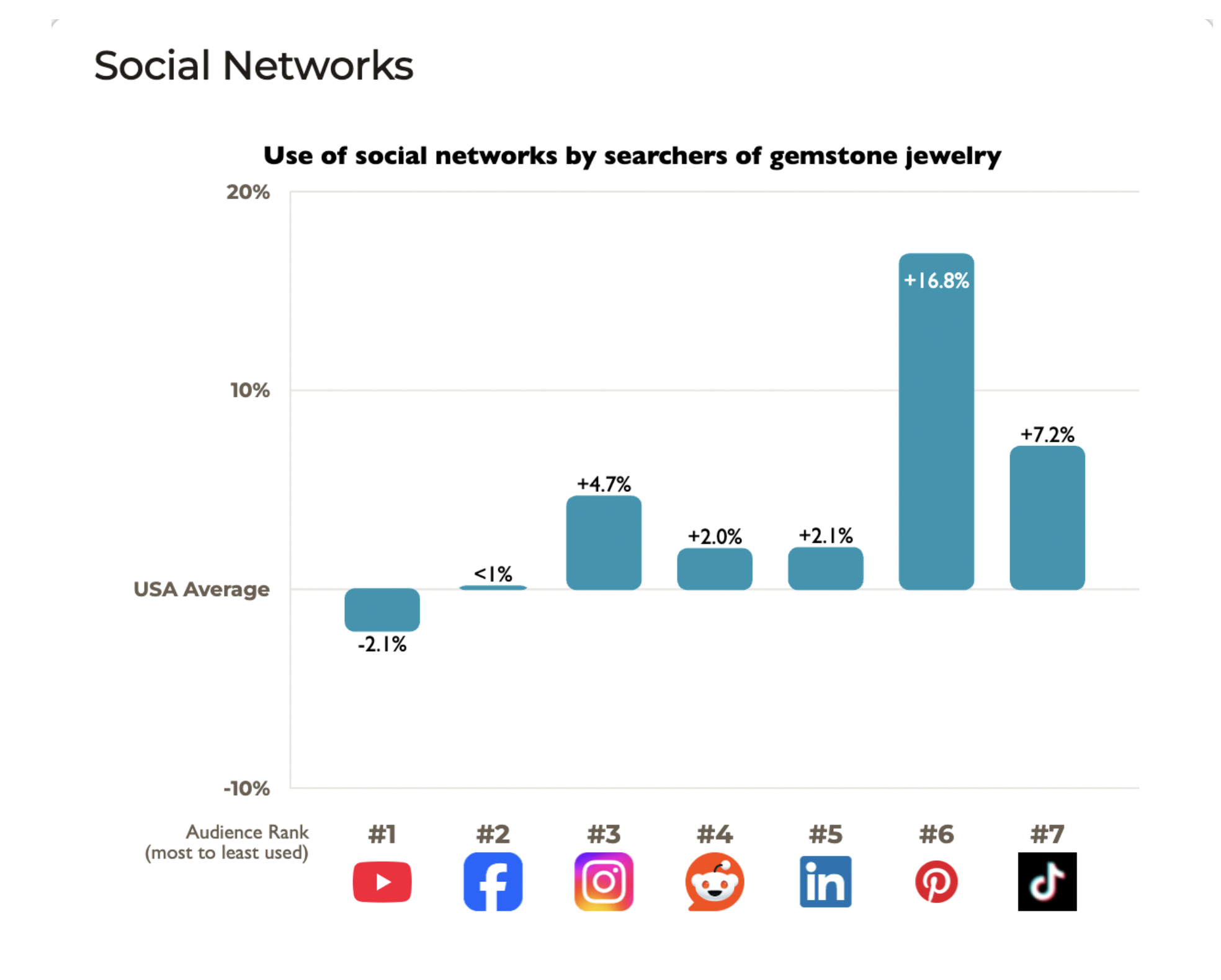
According to this graph, despite Pinterest being the 6th most popular platform, the percentage of people using it to search for specific queries like ‘gemstone jewelry’ far outpaces that of its more popular competitors. So, for jewelry brands, your audience is most engaged on Pinterest. That’s the reason it is still relevant. Go where your people are and have a presence so your brand has a chance to be discovered by them.
Despite Pinterest's messy evolution, one thing has remained constant: its core functionality—it’s still a search engine, with keywords at its heart for distributing your content. Vertical static image Pins still reign as king among all Pin formats and remain the recommended standard. [1]
But things are changing. If you’ve been feeling like your old Pinterest tricks, re-pinning to 20 boards, obsessing over "aesthetic" templates, or stuffing 20 keywords into a description, aren't moving the needle anymore, you aren’t crazy.
Recently, I dove into a massive study conducted by Tailwind, analyzing 1.2 million Pins across 17,000 accounts. The focus of the study was standard vertical static image Pins. The goal? To stop guessing and start following the data.
What I found completely reshaped how I approach content strategy for my clients. It turns out that successful marketing for creatives isn't about going viral overnight. It's about becoming a Strategic Content Architect, starting with your Pins.
This page is your roadmap. Below, I’ve broken down the 5 core pillars of a modern Pinterest strategy, with links to deep dives on each topic.
Pillar 1: Visual Strategy (Stop Over-Designing)
The "Ugly" Truth About Viral Images
For years, we thought the perfect Pin required a professional designer, three different fonts, and a complex layout. The data says otherwise.
In many creative niches, especially art, fashion, and decor, "Raw" images (simple photos without text overlays) are actually outperforming designed templates.
Why? Because users are tired of ads. A heavily designed Pin looks like a promotion. A raw, beautiful photo looks like inspiration.
Key Insight: You don't need Photoshop. You need better lighting.
👉 READ THE DEEP DIVE: Raw vs. Designed Pins – Why Your Approach to Design Might Be Wrong

Pillar 2: The Algorithm & Timing
Patience is a Metric
"Why didn't my Pin take off yet?"
If you posted it last week, you’re asking the wrong question. One of the most shocking stats from the study is that 40% of engagement comes from Pins over two years old.
Pinterest is a slow-burning lottery. Most Pins won't win, but the ones that do can drive traffic for years. This section of the strategy focuses on the "Fresh Pin" concept—how to signal to the algorithm that your content is new without reinventing the wheel every single day.
Key Insight: Pin today for success in a year.
👉 READ THE DEEP DIVE: Why Most of Your Pins Won't Go Viral (And the Hack to Create Fresh Pins)
Pillar 3: SEO & Text Optimization
The "Mixed Signals" Problem
Wait, don't leave this page just because I said "SEO." I promise to keep it human.
A common mistake creatives make is keyword stuffing. You know, writing a description like: "Blue earrings, earrings for mom, gift ideas, boho style, jewelry, gold..."
This confuses the Pinterest algorithm (and LLMs like ChatGPT). If you try to rank for everything, you rank for nothing.
What is Pinterest SEO?
Pinterest SEO is the practice of optimizing your Pin titles, descriptions, and board names to map your content to a specific node on Pinterest's interest graph. Clear, concise keywords help the AI categorize your content accurately.
We now know that shorter, focused descriptions (around 220 characters) perform better than long, rambling ones.
Key Insight: One Pin = One Core Keyword.
👉 READ THE DEEP DIVE: The Data-Backed Guide to Pinterest SEO & Keywords

Pillar 4: Psychology & Color
Why You Should Break Your Brand Guidelines
I know, I know. You spent money on your branding kit. You love your specific shade of "Millennial Pink."
But Pinterest users don't care about your brand consistency; they care about their mood board.
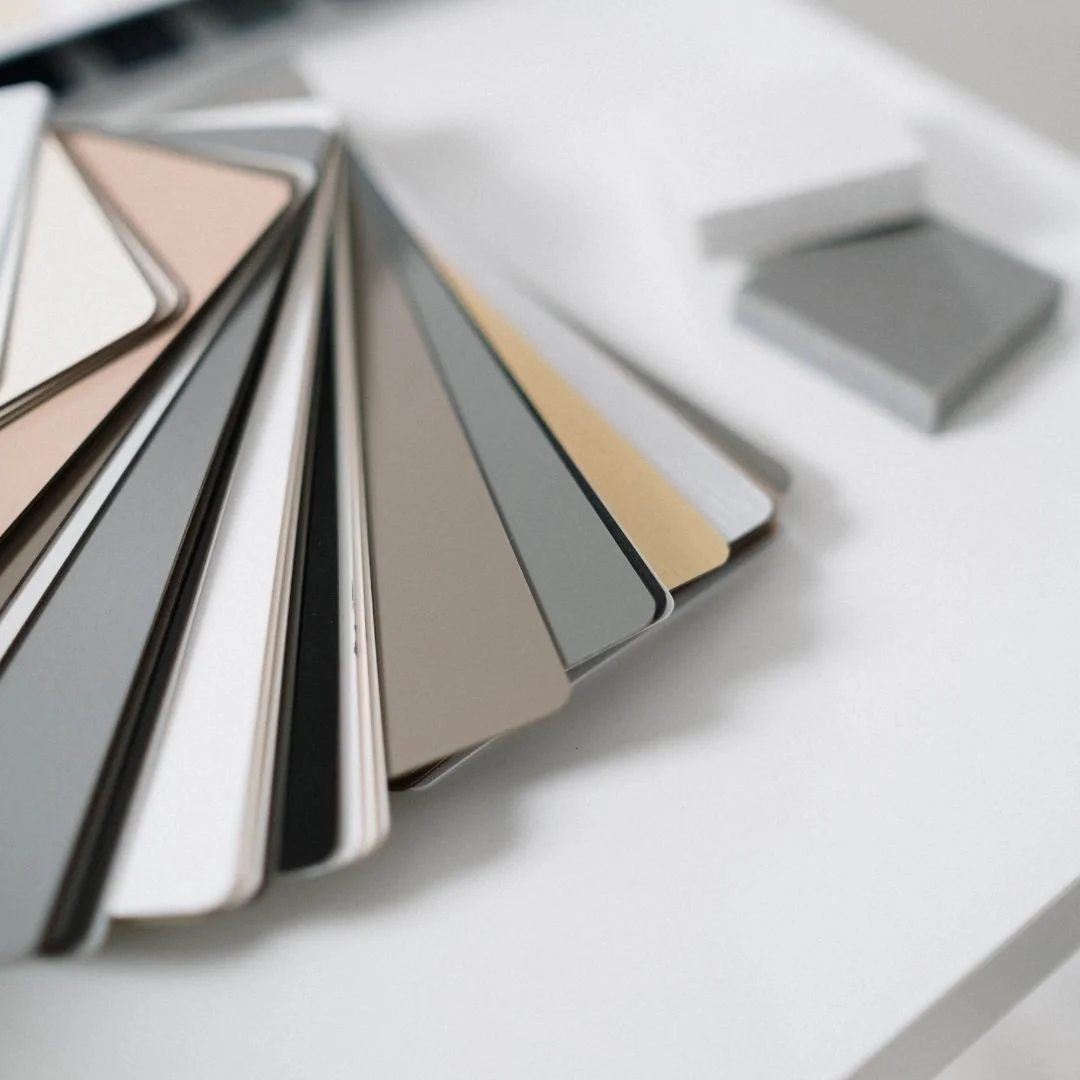
The study revealed that neutral tones (creams, teals, beiges) and high-contrast images perform best. Furthermore, seasonal relevance trumps brand colors every time. If it’s October, your audience wants warm, rusty, autumn tones—even if your brand colors are neon.
Key Insight: Design for the user's mindset, not your brand book.
👉 READ THE DEEP DIVE: Stop Using Your Brand Colors on Pinterest (Do This Instead)
Pillar 5: Conversion & Shopping
Don't Let Your Pin Be a Dead End
Here is the new reality: In an effort to become a shopping-first platform, Pinterest has trained AI to analyze images to detect objects, styles, colors, and textures, then uses this information to suggest similar shoppable items from its vast catalog of products from other merchants.
That’s right, Pinterest pits you against your competitors with shopping recommendations.
There are a few ways to run defense, one of which is “product Tagging”. Data shows that Pins with shopping tags get significantly higher engagement, even if the user isn't ready to buy right this second.
It’s about building a pathway. From the Pin, to the click, to the sale.
Key Insight: Protect your real estate. Tag your own products.
👉 READ THE DEEP DIVE: From Inspiration to Checkout – The Shoppable Pin Strategy
Conclusion: Becoming a Strategic Content Architect
Pinterest isn't dead; it just demands a smarter approach.
Thanks to the Tailwind study, we now have a modern blueprint for optimizing our Pins for the platform and its users. This should give you incredible confidence when creating your content, increasing the likelihood that it will be seen by your audience.
Optimizing your Pins for clicks is the best way to leverage Pinterest for what it does best: driving traffic. The user journey, however, doesn’t end with a Pin click; it continues on to your website.
And, it’s here where the actual conversion takes place (or doesn’t). Remember, Pinterest isn’t responsible for converting traffic, it’s job is solely to send traffic. Turning a click into a customer is purely up to you and your website. This is true for any social platform, including search engines like Google.
Most of the effort that turns your Pinterest marketing efforts into sales needs to be on what happens after the click. By shifting your focus from only "making pretty Pins" to building a search-optimized content ecosystem, you stop relying on vanity metrics like clicks to your website and start building a sustainable revenue-driving machine.
Ready to stop guessing?
I’ve created a resource to help you begin to understand how to turn that Pinterest traffic into customers where it matters most: your website. I touch on modern SEO strategies that retain traditional approaches, then add a layer for the new era of search, focusing on AI visibility.
Think Better. Pin Smarter. Grow with Purpose.
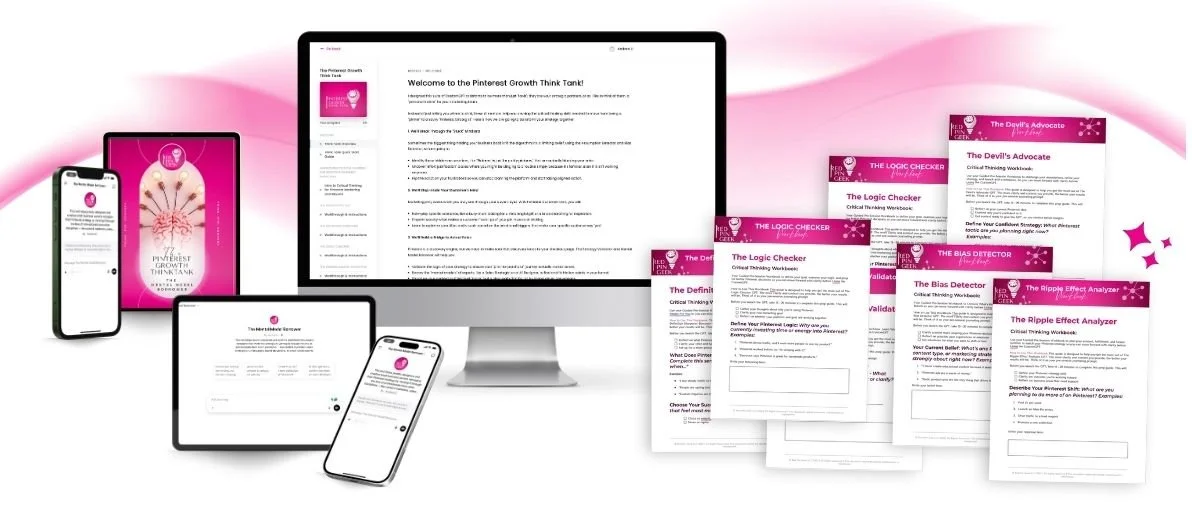
The Pinterest Clarity Suite is a set of AI-powered tools that helps creative business owners (like you!) uncover limiting beliefs, align strategy with business goals, and turn Pinterest into a sustainable growth engine, without the burnout.
Save Time.
Keep Reach.

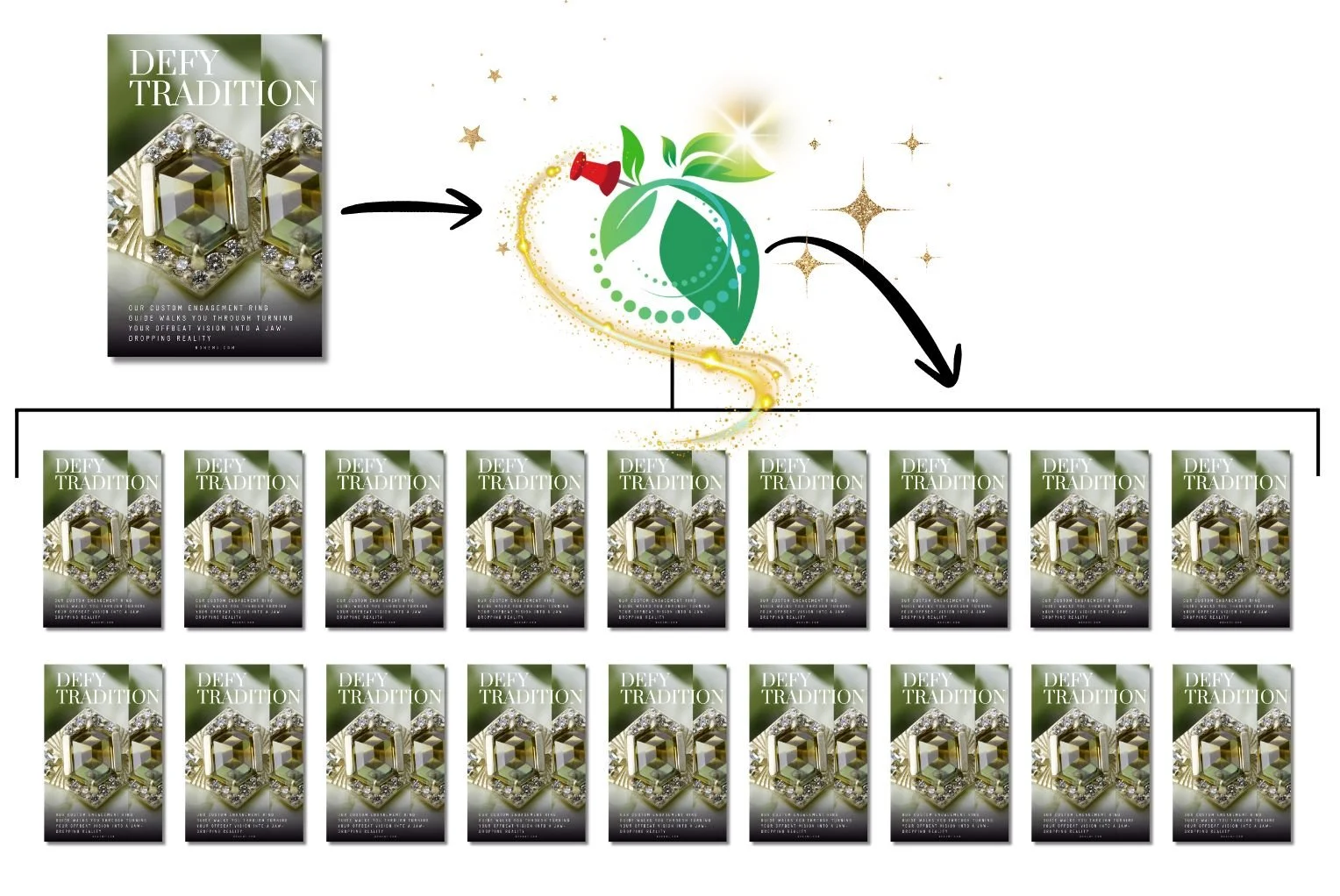
Turn one Pin design into dozens of “fresh” Pinterest images
Freshenator quietly adjusts the data, not your design, to create new image files that register as “fresh” Pins, so you can keep Pinterest happy without spending your life in Canva.
Pinterest prioritizes fresh images in home feed and search, but most solopreneurs don’t have time to design endless variations. Freshenator gives you the freshness signal without the creative burnout.
Pinterest wants fresh images. Your schedule disagrees.
Pinterest’s distribution system favors fresh visuals over repeated images, which means the same graphic pinned over and over will gradually reach fewer people.
Best‑practice advice now tells creators to constantly publish “fresh Pins” for the same URL, new images, new looks, new angles.
For a solopreneur, that can mean hours each week resizing, re‑layouting, and re‑exporting nearly identical designs just to stay competitive.
The result: creators either spam the same image and accept weaker reach, or burn time in design tools instead of making products and content.
Freshenator was built for that exact pinch point.
Freshenator creates new images from the inside out

Upload a single finished Pin image you already love.
Freshenator subtly alters the data of that file, generating multiple technically unique images that still look visually identical to the human eye.
Each output is a distinct image file that can qualify as a “fresh” Pin image while preserving your typography, colors, and layout.
You stay on‑brand and on‑message while feeding Pinterest a reliable stream of fresh visual signals.
Freshenator doesn’t slap on filters, crop your text, or break your brand guidelines. It works at the pixel level, behind the scenes.
-

Save hours of design time
Stop rebuilding the same Pin six different ways. Design once, then let Freshenator create your “fresh” variants while you focus on making products, writing content, or packing orders.
-

Leverage 'Fresh' Benefits
Pinterest emphasizes fresh images as a distribution lever. Freshenator lets you publish a steady rhythm of fresh image files from your strongest creatives, instead of letting them die after one Pin.
-
Extend the life of every Pin
When a Pin design starts performing, don’t retire it. Run it through Freshenator, create a batch of fresh image versions, and keep that winning concept going.
-
Perfect for small catalogs
If you don’t have hundreds of SKUs or blog posts, you can still compete. Use Freshenator to keep your most important URLs supported by a deep library of fresh images, not just one or two.
How Freshenator “freshens” a Pin
Start with your original Pin image (PNG or JPG).
Freshenator analyzes the pixel data and creates new versions with microscopic changes in color values and compression, small enough to be invisible in normal viewing, but large enough for Pinterest to treat the file as a new image.
You download a batch of fresh image files and upload them to Pinterest, just like any other Pin.
Pair them with your existing titles/descriptions or new copy, and schedule them over time.
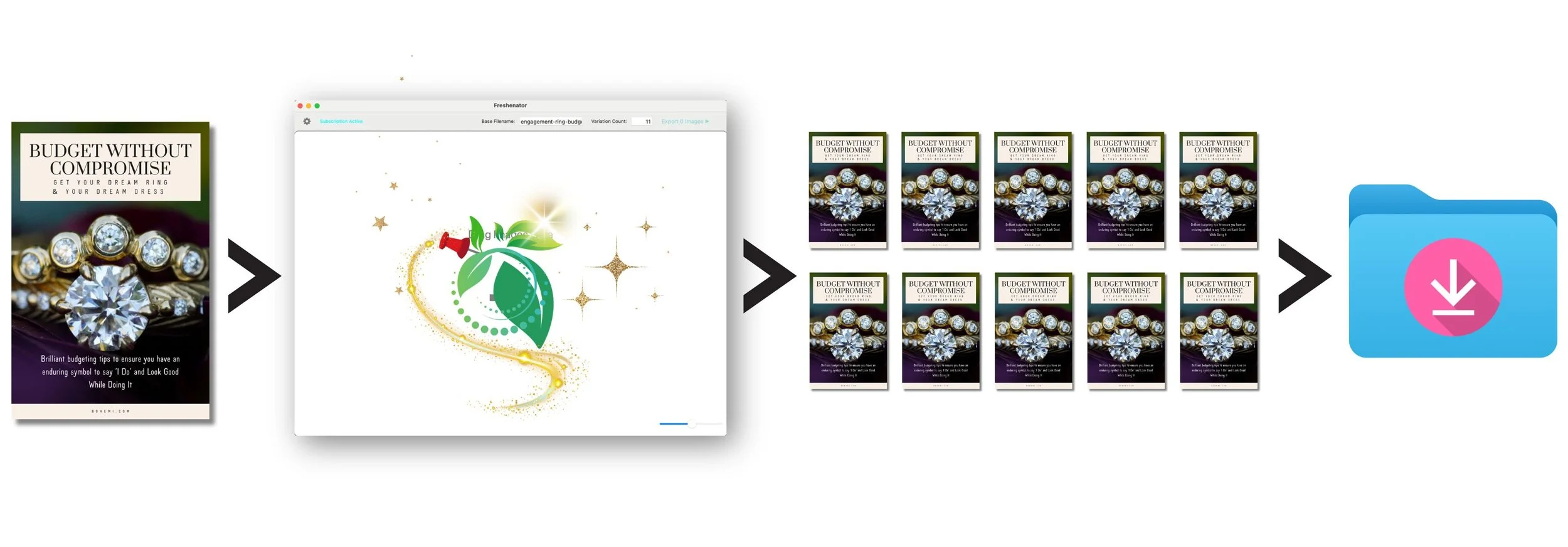
Your designs, fonts, and brand colors stay intact. Only the underlying pixel data shifts.
-

E‑commerce shops
Turn your best product hero image into a series of fresh Pins that support seasonal keywords, holiday gifting, and new collections, all without rebuilding the Pin each time.
-

Bloggers and educators
Take your top educational Pin covers and generate fresh image versions so you can re‑surface evergreen posts throughout the year without visual fatigue.
-

Service providers & course creators
When you have one hero Pin that converts for your lead magnet or webinar, Freshenator helps you keep it in rotation as fresh image files.
Is this safe and within the spirit of the platform?
Will this break my branding?
No. Freshenator doesn’t move your text, change your fonts, or slap on random filters. To your followers, every image looks like the same polished design you designed and approved.
Is this spammy or shady?
Freshenator supports that by giving you more subtle variation at the image‑file level, so you can publish consistently without obvious duplication. Use it to support valuable content, not to flood the platform.

Do I still need strong strategy and copy?
Yes. Freshenator amplifies great creative; it doesn’t replace it. You’ll still see the best results when you pair your fresh images with thoughtful topics, keywords, and boards.
Priced for solopreneurs, not agencies
You shouldn’t have to choose between honoring Pinterest’s love of fresh content and having a life outside Canva. Let Freshenator handle the pixel‑level busywork so your best Pins can keep working for you.
Starter: Try it out for free with the Freshenator watermark.
Growth: Upgrade to the monthly subscription to remove the watermark.
Studio: For solopreneurs and Pinterest managers handling multiple accounts.
No lock‑in, no learning curve, just upload your best Pin and turn it into a reusable, fresh‑image asset.
Frequently Asked Questions
-
Freshenator doesn’t automate posting or misrepresent content; it simply creates technically unique versions of an image you already designed. You’re still in full control of what you upload, when you post, and how often you Pin. Use it to support high‑quality, relevant content, not to spam low‑value Pins.
-
Freshenator isn’t a loophole; it’s a production shortcut. Pinterest rewards accounts that publish fresh, useful content on a consistent basis. You still have to choose strong URLs, thoughtful keywords, and helpful boards. Freshenator just takes the repetitive design work out of keeping those Pins visually “fresh” to the algorithm.
-
No. Freshenator works at the pixel level, not the layout level. Your fonts, colors, logo placement, and overall design stay exactly the same to the human eye. The only thing that changes is the underlying image data that platforms use to tell files apart.
-
Any tool can be misused. If you blast dozens of nearly identical Pins in a single day, that can look spammy no matter how they were made. Freshenator is designed for sustainable use: create a small batch of fresh image files, then schedule them responsibly over time, just like you would any other best‑practice Pin.
-
Yes. Freshenator is ideal for stretching your best performers and high‑priority URLs, not replacing good creative altogether. You’ll get the best results by pairing new designs (“hero” creatives, seasonal looks, new offers) with regular batches of freshened versions to keep them in circulation.
-
Absolutely. Fresh images are one signal; strong copy and relevance are another. Freshenator handles the image side. You’re still in charge of writing compelling, keyword‑rich titles and descriptions.
-
Upload standard Pin‑ready PNG or JPG images. Keep using your usual aspect ratios and resolutions; Freshenator doesn’t resize or crop your image, it simply generates fresh variants at the same dimensions for easy upload to Pinterest.
-
As many as you want. The sweet spot for most creators is around 10 fresh images per original design, spaced out over weeks or months and scheduled to 10 relevant boards to capture multiple keyword search queries.
-
Treat each fresh file like a new opportunity to resurface your content:
Pin to different relevant boards.
Test different titles, descriptions, and hashtags.
Match fresh images with seasonal or promotional angles (launches, holidays, sales).
-
You remain the owner of every image you upload and every file you generate. Freshenator uses your image only for processing and returns your fresh versions; you decide where they live and how they’re used.