
Case Study:
How I Ranked #1 on Google, Bing, and DuckDuckGo (Without Ads)
I didn’t “optimize a product page.” I built a ranking engine, then let my products hitch a ride.
Pastel gemstone jewelry ranked #1 on Google, Bing, and DuckDuckGo because I published a pillar page first, structured it for topical clarity and buyer intent, and added products only after the page was already ranking, so new products inherited visibility through internal linking and entity consistency.
Reading Now
The Problem Most Jewelry Brands Run Into
Timeline: What I Did (and When)
What Made the Pillar Page Rank
Proof: SERP Screenshots + Why Each One Matters
The Workflow I Used to Upload the Collection (SEO + GEO Optimized)
The Pinterest Pin Campaign That Helped Reinforce Rankings
“Google doesn’t rank products. It ranks understanding. Products rank when they’re attached to a page that already owns the topic.”
The Problem Most Jewelry Brands Run Into
You upload a collection. You write a description. You add a few keywords. Then you wait. I get it because this used to be my process too, but that was before I started digging into how to get the visibility my products (and yours) deserve. I have a good friend who once told me that he loves making things, but it’s the selling that prevents him from doing anything with his creations. I think we can all relate to that sentiment.
If you’re reading this, however, it’s likely you already made moves to turn your creativity into a business. The goal here is not to ‘get started’ but to optimize what you’ve already built. Mainly your website, because that is your selling tool. You're not just optimizing for clicks but for what happens after the click to impact your bottom line and convert those clicks to sales.
I’m here to help you think strategically so your best work doesn’t get buried under:
big marketplaces
brands with stronger topical authority
or pages that look similar but publish faster
My thesis, based on stress testing my own strategies:
If your collection page is the first page you publish on a topic, you’re asking Google to trust you before you’ve explained anything. This is important because Google continues to hold over 80% of the global search market share, and if Google hasn’t received the right signals to identify you as a trustworthy authority, you’re less likely to win the search raffle.
The Strategy in One Line
I built the pillar page first, let it rank, then attached products after.
That order matters. Why it matters? We’ll get into that. By the end of this case study, you’ll walk away with clarity into how these search systems work and why you’re creating content not just for your ideal customer but for the algorithms responsible for your brand visibility. Think of it like this. You create content for different personas, such as ‘Sally the Sentimental Seeker’. Search platforms, including LLMs, are just another persona you need to consider.
Most brands do this:
Products → hope for rankings
I did this:
Topic authority → rankings → products
“I stopped treating SEO like a plugin and started treating it like product distribution.”
Timeline: What I Did (and When)
October 2025, Pillar Page Goes Live
I published the Pastel Gemstone Jewelry pillar page before adding a full product collection. If you’re familiar with how Pinterest works, you know that it takes 3-6 months for your Pins to rank. SEO works in a similar capacity. It takes a moment for the crawlers to index new pages and then to rank them. I go into detail about my process for building my pillar page on Substack. For Premium Subscribers, I provide a step-by-step walkthrough of the technical implementation, with videos for each phase of the buildout. But for now, let’s just touch on the main points behind the pillar page's content strategy.
What the pillar did:
defined the topic clearly
compared related concepts (pastel vs vibrant)
helped shoppers self-identify preferences (interactive tool)
created internal pathways into shopping pages
Check out my: Pastel Gemstone Jewelry Pillar Page
Within ~1 Month, It Ranked
The page ranked quickly because it wasn’t “just a category landing page.” It was an answer and not just one answer, but multiple related answers. This is called topic-first keyword research.
After It Ranked, Products “Hitched a Ride”
Then I uploaded the actual products and built supporting collection pages (necklaces, earrings, bracelets) that linked back to the already-ranking pillar page.
Result: immediate visibility for the shopping pages because the hub already held authority.
“I didn’t launch a collection. I launched a search result.”
What Made the Pillar Page Rank
1) It renders real content (not text trapped in images)
Search engines can’t rank what they can’t read. Pretty pages fail when the meaning is decorative instead of visible to search engines. I’m talking about rendering visual components with HTML, including images and tables. If you do have images that are too complex to render in HTML, like the ones in this post, be sure to include alt text and have accurate file names.
2) It covers the topic like an expert, not a catalog
The page answered questions people actually ask, like:
What counts as “pastel” in gemstones?
Which gemstones are naturally pastel?
How do you choose based on skin tone or vibe?
How do you style pastel stones without looking washed out?
3) It uses a structure that machines and humans can skim
This is the “busy human” rule: your visitor can click away in 2 seconds when faced with a wall of text that’s not skimmable. Ironically, the same applies to robots crawling your content. Your content loses its meaning if it’s not structured into concise ‘chunks’ that clearly define what that section is about.
So the page uses:
short sections
clear H2/H3 headers
tables and comparison blocks
internal links that move people forward
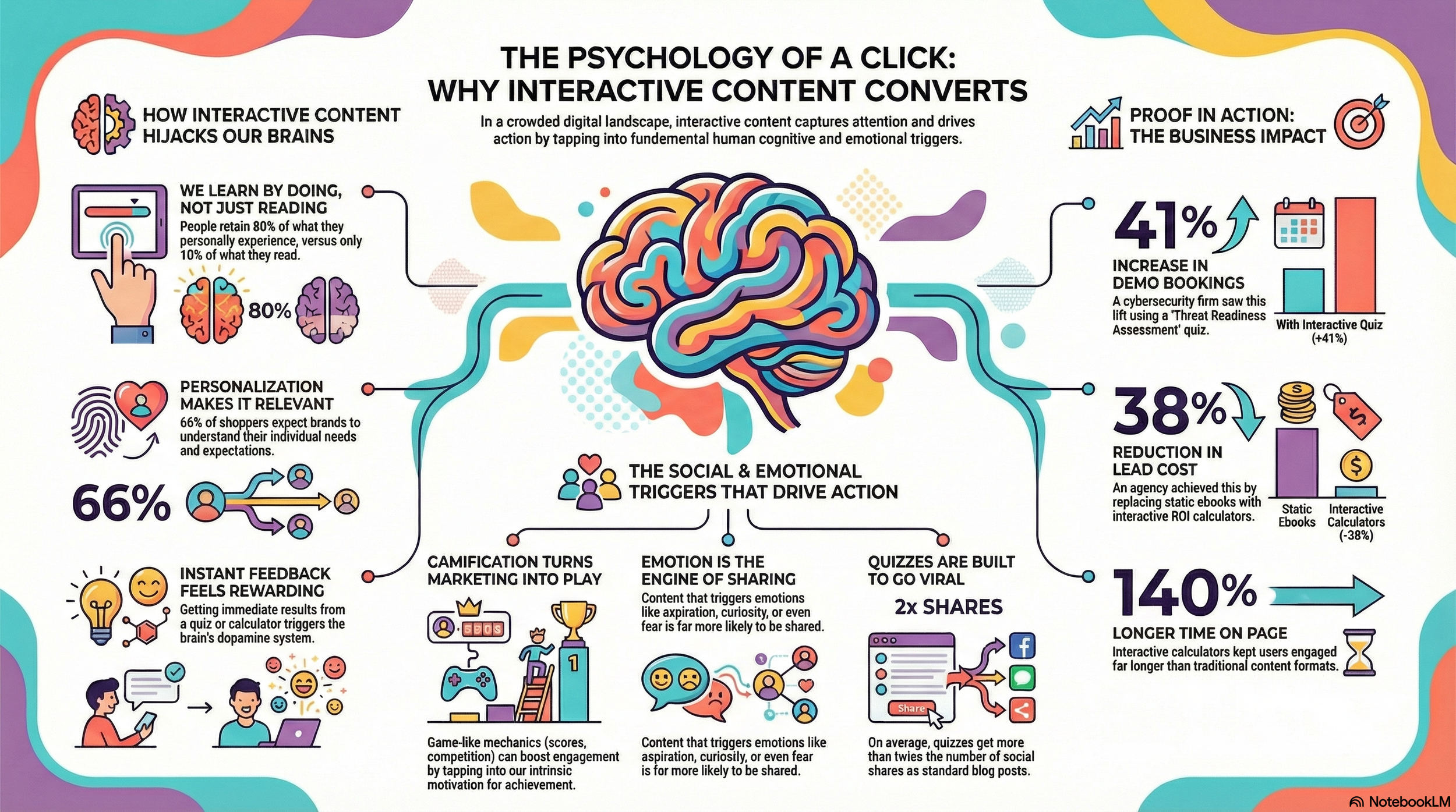
4) It has interactive + comparative elements
Comparison tables and interactive tools do something most pages don’t: They clarify intent, and intent clarity is what search engines reward. But it goes beyond that; it taps into key psychological drivers like curiosity, self-discovery, reward pathways that boost dopamine, a sense of control to give a sense of autonomy, and connection.
Proof: SERP Screenshots + Why Each One Matters
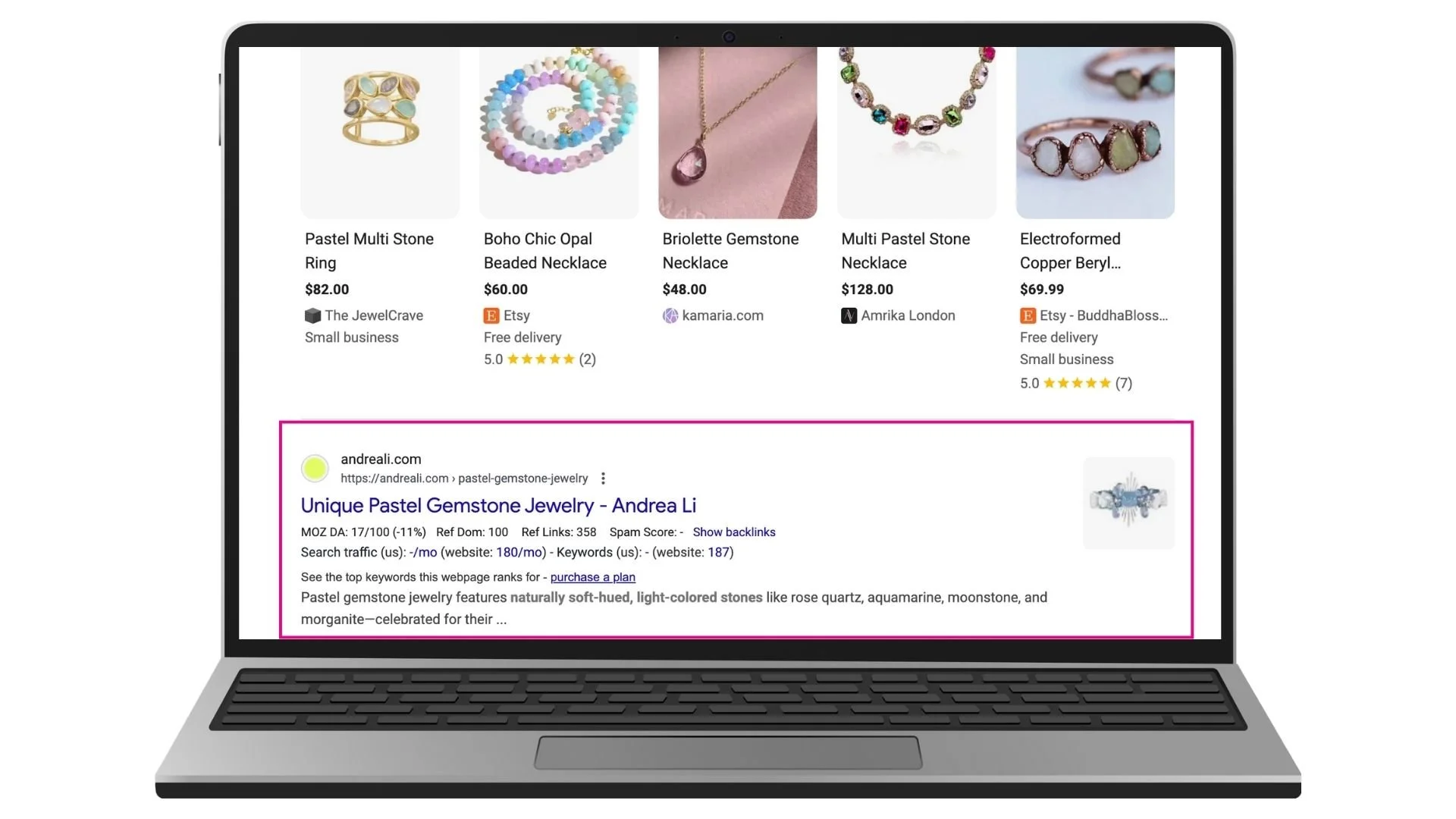
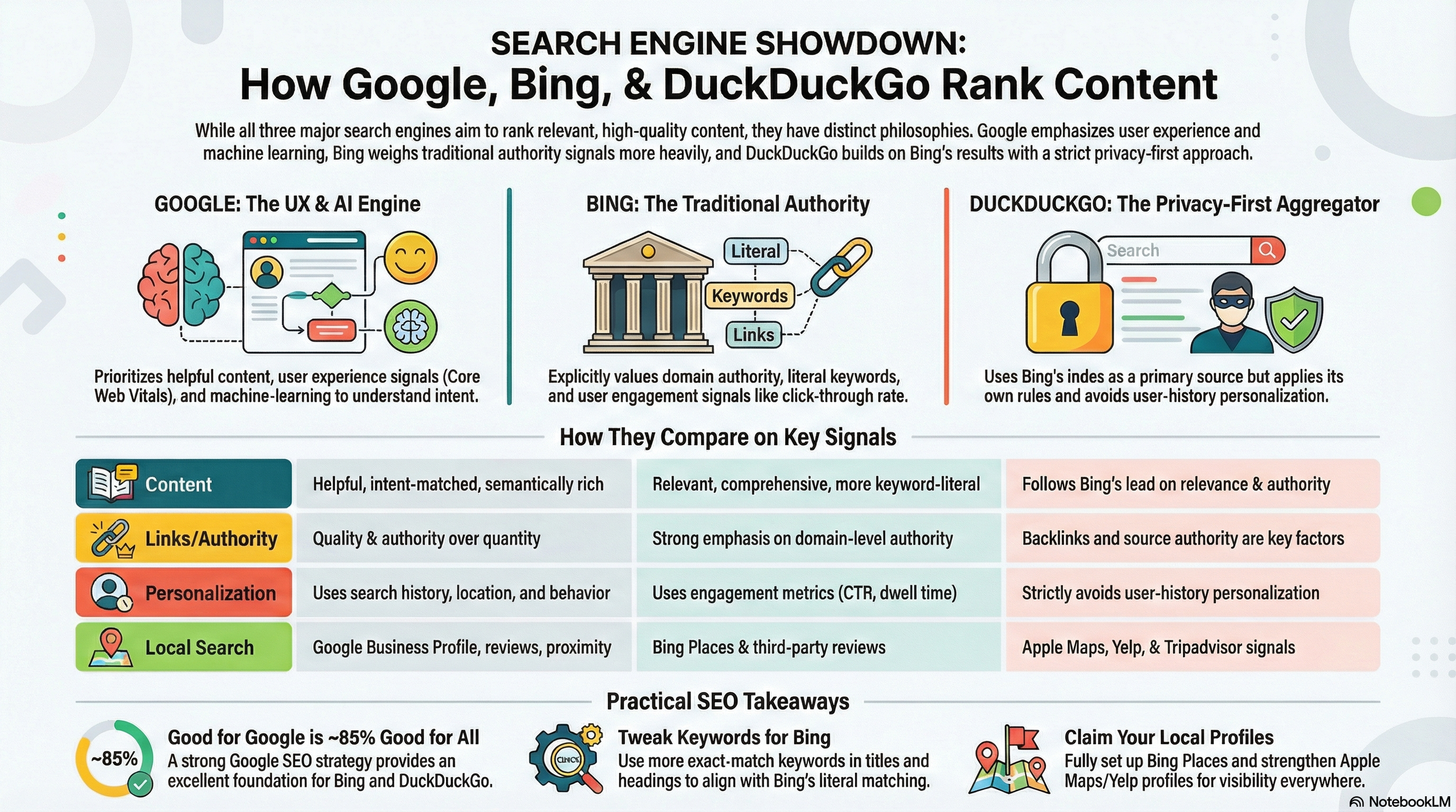
Google: Why it matters
Google is the default trust engine. Ranking #1 means: [1]
Helpful, intent‑matched, semantically rich, which means content that focuses on meaning, not just exact words. It covers the main topic, the obvious follow‑up questions, and closely related subtopics in one coherent, easy‑to‑read piece
Quality of content
Be the “canonical answer” (most authoritative version of that content), people click first.
When you view these screen captures, be sure to look below the sponsored results, which always appear at the top of the SERP (Search Engine Results Page), along with additional ranking placements for popular products. The first brands mentioned below the paid positions are the top-ranking for organic results. Remember, I didn’t spend any money on Google Ads.
Bing: Why it matters
Bing rewards clarity and structured meaning. Ranking #1 here confirms your page is: [2]
Relevant, comprehensive, often more keyword‑literal.
Domain authority, decent links, and more traditional signals.
Good load time, mobile‑friendly but less strict.
DuckDuckGo: Why it matters
DuckDuckGo often behaves like “clean relevance mode.” Ranking #1 suggests your page isn’t winning because of brand size — it’s winning because it’s the most direct, useful answer. [3]
Relevance & authority
Backlinks and source authority emphasized
Good load time, mobile‑friendly
The Workflow I Used to Upload the Collection (SEO + GEO Optimized)
This is the system behind the outcome. This part you can replicate for your brand. I outline this in a bit more detail in my SEO and AI Visibility Guide for Jewelry Designers.
Step 1: Build a “seed spreadsheet” for every product
Before uploading anything, I mapped:
product name variations
primary keyword phrase
stone name(s)
jewelry type (necklace/earrings/etc.)
descriptors people actually search (e.g., “pink tourmaline,” “pastel gemstone necklace”)
Step 2: Write first-party product narratives
Not generic descriptions. Not “handmade with love.” I provided depth and unique perspectives, avoiding boilerplate product descriptions to add something new to the internet's content. I communicated through storytelling of my personal experience making each piece.
I wrote:
What makes the piece unique
The story behind the design choices
The specific materials and gemstone identifiers
First-party detail is one of the only things small brands can do that mass sellers can’t replicate. This is a huge benefit for independent designers who have deeply personal reasons for creating, unlike big box retailers.
Step 3: Use entity thinking (not keyword stuffing)
Instead of repeating the same phrase 10 times, I made sure each page included:
The gemstone entity
The jewelry type entity
A relevant style entity (e.g., minimal, romantic, statement)
A use-case entity (gift, bridal, everyday)
That way, the page communicates meaning through relationships, not repetition. Remember, search engines and LLMs want to understand ‘things’, not ‘strings’.
Step 4: Upload products into the ranking ecosystem
Every product page and sub-collection page supports the pillar by:
Linking back to it
Using consistent naming conventions
Reinforcing the same topic cluster
This is the “hitch a ride” move.
“SEO isn’t just about a strategy to establish authority. It’s also about connecting the right pages so that authority flows where you want sales.”
The Pinterest Pin Campaign That Helped Reinforce Rankings
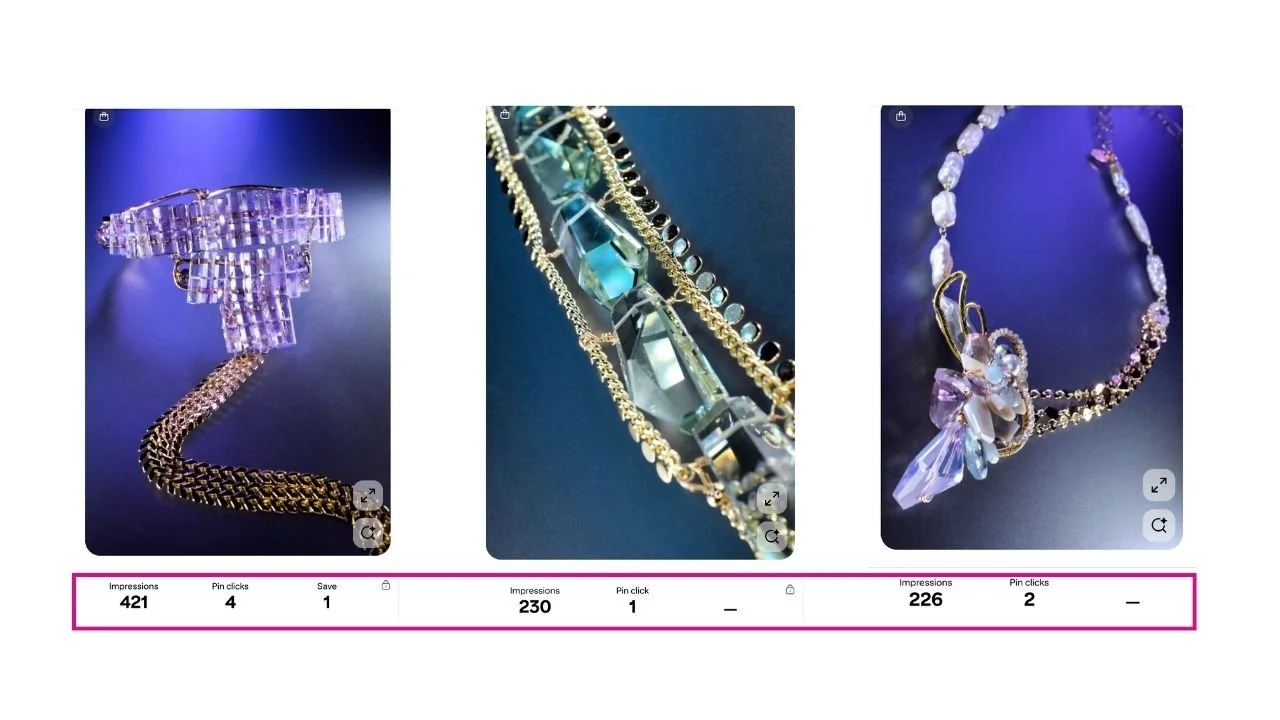
Pinterest didn’t “make” Google rank me. But it did accelerate what search engines love to see. Mainly, that my brand has a presence on platforms outside of my website and that people are engaging with my content. Additionally, I used current best practices, which you can check out in my Pinterest Strategy Resource Hub, with much better results than my older Pin campaigns yielded with previous methods.
What happened
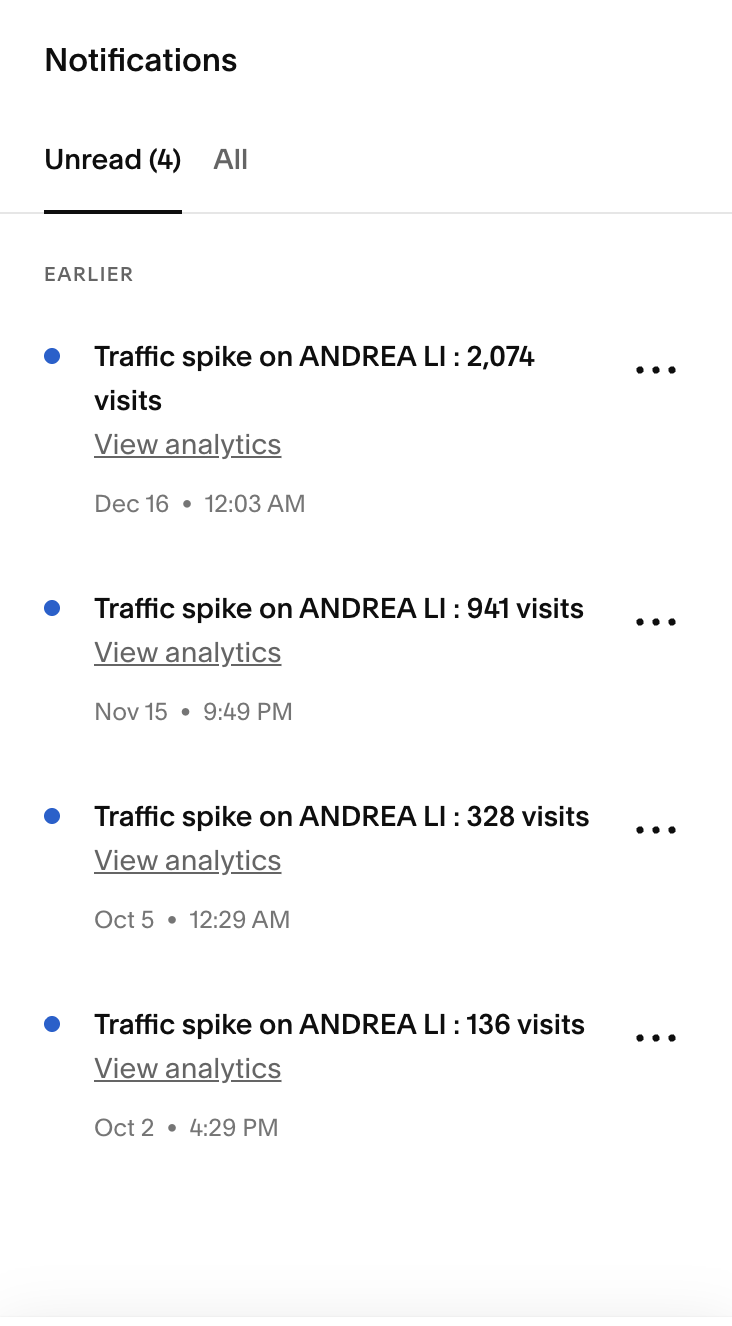
+60% page visits
+1.6% saves from Pinterest
Why that matters
Pinterest is a discovery engine that can:
Bring consistent, long-tail traffic
Create repeated engagement signals over time
Drive “save now, return later” behavior that increases brand recall
Send intent-aligned users to a page built to satisfy their curiosity
And crucially: I wasn’t sending Pinterest traffic to a dead-end product grid. I sent it to a pillar page designed to answer, educate, and then guide shoppers into products. In future campaigns, I will send Pins directly to the corresponding product page to create more fresh URLs on the platform.
“Pinterest is great for sending traffic and having a brand presence, but it’s what happens after the click on your website that matters most for conversions.”
On-Page SEO Elements I Used (The Quick Checklist)
Title tag
Include the topic + a real differentiator + brand
Example: Pastel Gemstone Jewelry | One-of-a-Kind Handcrafted Pieces by Andrea Li
Meta description
Define the page + promise value + invite action
Example: Discover pastel gemstones, compare stones, find your best colors, and shop one-of-a-kind necklaces, earrings, and bracelets.
Headers (H1/H2/H3)
H1 = exact topic
H2s = the questions people search
H3s = the supporting detail
Image alt text
Describe what it is, not what it “feels like.”
“Pastel aquamarine gemstone necklace in sterling silver”
“Pink tourmaline drop earrings pastel gemstone jewelry”
Internal links
From pillar → sub-collections → products
From products → back to pillar (context + authority reinforcement)
Results + Interpretation
The simple cause → effect chain (what happened)
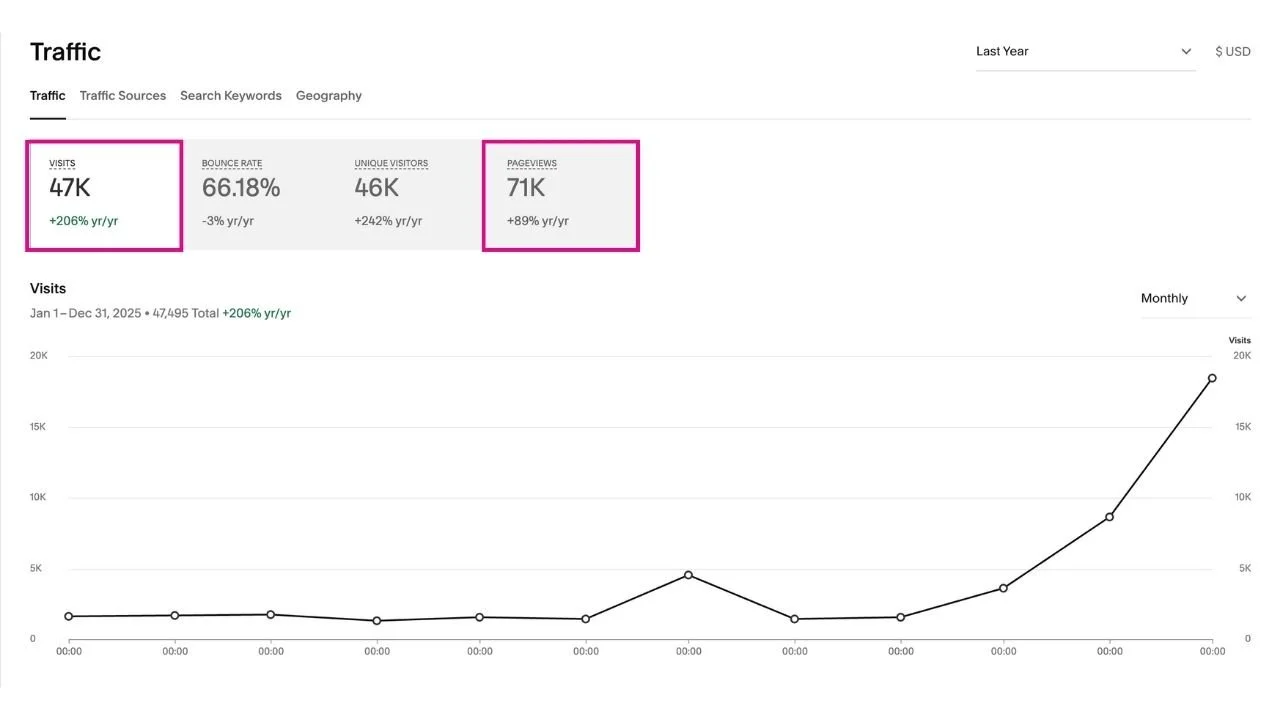
Rank #1 SERPs → More clicks → +206% visits / +242% unique visitors → More pageviews across the site → Product discovery increased → Higher-value orders lifted revenue (+89%) even with fewer total orders.
That’s the headline outcome. But the most interesting part is how the growth showed up inside the traffic sources.
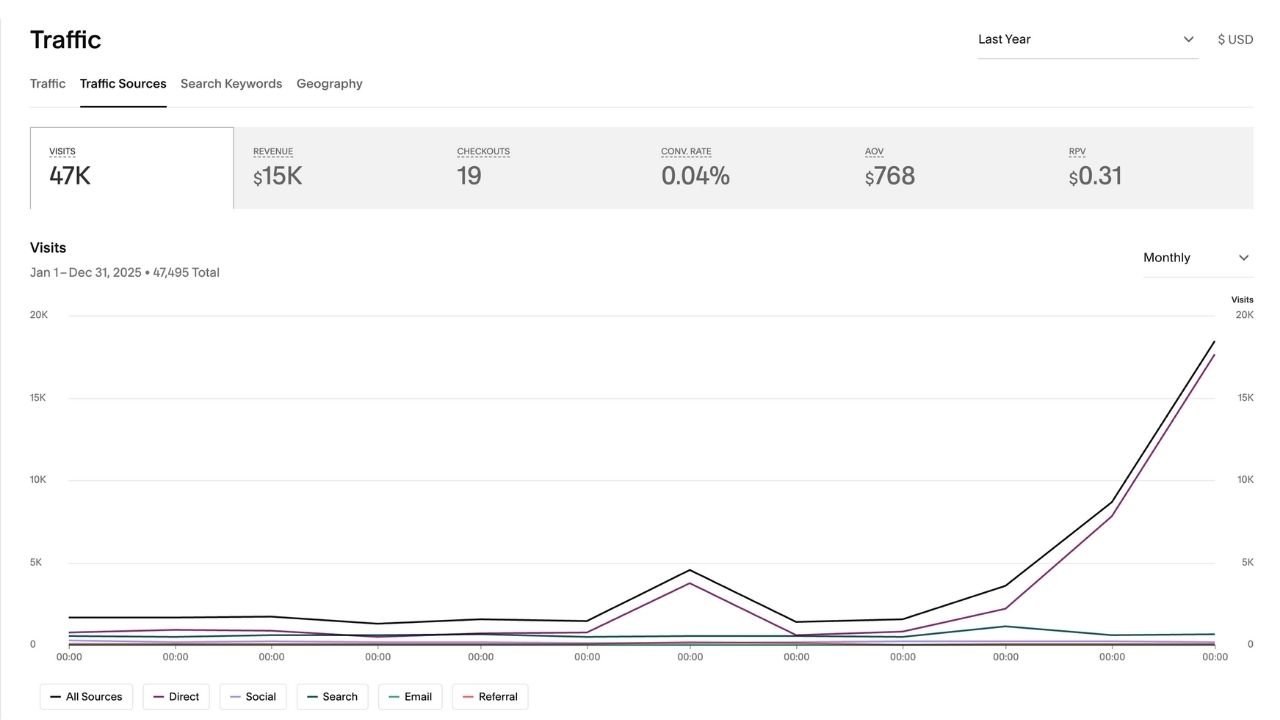
Traffic source impact (what changed)
In the same year, the Pastel Gemstone pillar page ranked #1, my traffic and revenue distribution showed a clear authority footprint:
Search drove discovery: 7,292 visits and $890 revenue
Direct drove conversions: 37,255 visits, $13,704 revenue, and $806 AOV
If your goal is “rank a product collection,” you’ll often obsess over Search traffic alone. But ranking a pillar page does something bigger:
It turns your brand into the default answer, and the default answer gets remembered.
That’s why the biggest impact showed up as Direct: people returned when ready, typed the URL, opened saved links, or clicked from “dark social”, then purchased at a higher AOV.
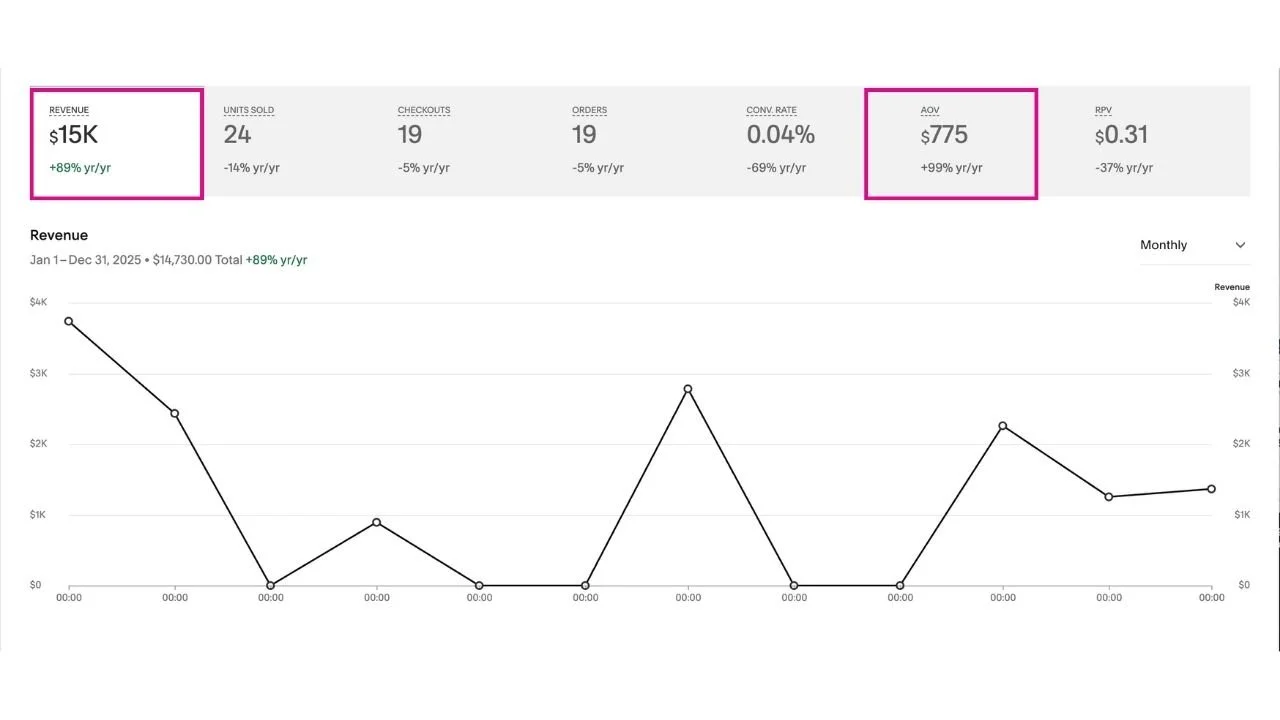
Why conversion fell (and why that’s not a problem)
Conversion rate dropped because the rankings expanded top-of-funnel discovery, more researchers entered the site earlier in the buying cycle. But revenue still climbed because the strategy increased purchase quality, nearly doubling AOV.
In other words, the pillar didn’t just attract buyers; it attracted future buyers, then guided them back when they were ready to commit. On a side note, I cannot stress the importance of a robust content ecosystem. Meaning that all of this needs to work in tandem, not in lieu of, with your other marketing channels, such as email. Direct, personal outreach to your loyal audience is a high-conversion tactic not to be ignored.
“Ranking #1 didn’t just increase traffic, it increased return intent, and return intent is where high-AOV purchases happen.”
What This Means for Creative Small Business Owners
If you want your products to rank, stop starting with products. Instead, give people a reason to buy from you. Establish trust, serve your audience by providing answers to questions they might have, and signal to search engines that your brand is the authority on your specific niche of products.
Start with:
Build topical authority around the types of products you make
Create a pillar page first to give it an opportunity to rank
End with an upload workflow that attaches your products to that authority
That’s the play.
Want A Similar Outcome for Your Brand?
See how I turned my jewelry collection into a ranking ecosystem on my Substack. This insight is perfect for jewelry designers, makers, and product-based brands who want organic visibility that lasts.
The full method
Want a #1 ranking on your own store?
This ranking came from content architecture, not luck or ad spend. The repeatable method behind it, the one I run on every store, is in the guide.
Read the Jewelry SEO and AI Visibility GuideGet In Touch
If you're interested in working with me, complete the form with a few details about your project. We'll review your message and get back to you within 48 hours.